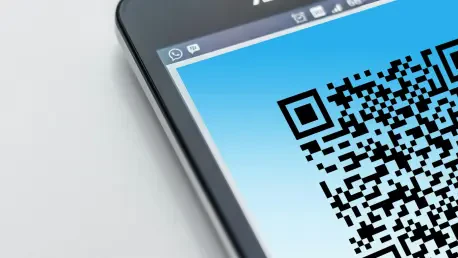

The deceptively simple black-and-white squares known as QR codes have become so integrated into daily life that scanning one feels almost reflexive, yet this familiarity is now being weaponized in sophisticated cyberattacks that challenge the very foundations of modern digital security. The U.S. Federal Bureau of Investigation (FBI) recently released a detailed security advisory highlighting a widespread campaign where state-sponsored threat actors are using a technique dubbed “quishing”—or QR code phishing—to circumvent robust defenses like multi-factor authentication (MFA). This emerging threat vector, leveraged by the North Korean-affiliated group Kimsuky, underscores a critical vulnerability in enterprise security: the unmanaged gap between a secure corporate computer and an employee’s personal mobile device. By tricking a user into scanning a malicious QR code, attackers can pivot from a highly monitored environment to a personal phone, a space where corporate security policies and advanced threat detection tools are often absent, creating a perfect blind spot to initiate an attack.
The Anatomy of a Quishing Campaign
The success of these advanced quishing campaigns hinges on meticulously crafted social engineering pretexts designed to establish trust and urgency, compelling the target to act without suspicion. Attackers from the Kimsuky group, which is linked to North Korea’s Reconnaissance General Bureau (RGB), have demonstrated a sophisticated understanding of corporate and governmental communication norms. They have been observed impersonating credible figures such as foreign policy advisors requesting expert opinions on sensitive matters, embassy staff sharing what are purported to be “secure” documents, or even internal colleagues directing a recipient to a supposedly critical company resource. In one documented tactic, the adversaries sent out fraudulent email invitations to a non-existent academic conference. The email prompted recipients to scan a QR code to register, which then redirected them to a credential-harvesting landing page meticulously designed to mimic a legitimate Google login portal. These scenarios are effective because they prey on professional obligations and curiosity, making the request to scan a QR code seem like a logical and secure next step in a legitimate workflow, thereby lowering the victim’s guard.
The core technical strategy behind quishing deliberately exploits the architectural divide between different user devices and their associated security postures. An attacker’s initial email, containing the malicious QR code, is typically received on a corporate desktop or laptop. These machines are usually fortified with layers of enterprise-grade security, including Endpoint Detection and Response (EDR) solutions, email filtering, and web traffic monitoring. The attackers are acutely aware of these defenses. By embedding a QR code, they create a call to action that cannot be completed on the desktop itself; it requires the user to pick up their personal mobile phone. This single action of switching devices is the linchpin of the entire attack. The personal smartphone is almost always an unmanaged device, lacking the stringent security policies and monitoring capabilities of its corporate counterpart. Once the user scans the code, their phone’s browser is directed to the malicious site, completely bypassing the corporate security stack. This creates a secure channel for the attacker to interact with the victim, harvest their credentials, and proceed with the next phase of the attack, all while remaining invisible to the organization’s security operations center.
Beyond Credential Theft to Session Hijacking
While the initial phase of the attack involves a credential-harvesting page, the ultimate prize for these sophisticated adversaries is not merely a username and password. The primary objective is to steal the session token that is generated after a user successfully authenticates, a process that often includes completing a multi-factor authentication challenge. This token acts as a temporary key, proving the user’s identity to various applications and services for the duration of their session without requiring them to re-enter their credentials. When the victim enters their username, password, and MFA code on the attacker’s fraudulent login page, this information is instantly relayed to the legitimate service. Once the service validates the credentials and issues a session token, the attacker intercepts it. This stolen token becomes the key to a far more insidious technique known as a session replay attack. By presenting this valid token to the cloud service, the attacker can effectively impersonate the legitimate user and hijack their active session, gaining full access to their account and data without ever needing the password or MFA device again.
Once an attacker successfully executes a session replay attack, they gain a persistent and dangerous foothold within the target organization’s network, often without triggering the typical security alerts associated with failed login or MFA attempts. From the compromised cloud identity, such as an email account, the adversary can move laterally, escalate privileges, and exfiltrate sensitive data. A common next step involves using the hijacked mailbox to launch secondary spear-phishing campaigns. An email sent from a legitimate, trusted internal account is significantly more likely to succeed in deceiving other employees or even external partners. This allows the threat actor to propagate their attack throughout the organization and its supply chain. The FBI now considers this form of MFA-resilient identity intrusion a high-confidence threat, recognizing that the combination of clever social engineering and the exploitation of the personal device security gap creates a potent method for bypassing what many consider a cornerstone of modern cybersecurity. The entire sequence, from the initial email to deep network persistence, highlights a critical evolution in attack methodologies.
Fortifying Defenses Against Evolving Threats
The rise of quishing campaigns ultimately demonstrated that while MFA was a crucial security layer, it was not an infallible solution against determined adversaries. These attacks underscored the critical importance of addressing the human element and the inherent vulnerabilities created by the seamless integration of personal and corporate devices. The security community learned that protecting an organization required a more holistic and adaptive strategy that extended beyond the traditional network perimeter. This meant investing heavily in continuous user education to build awareness around device-switching tactics and the dangers of scanning unsolicited QR codes. Furthermore, the incidents accelerated the adoption of zero-trust security principles, which operate on the assumption that no user or device should be implicitly trusted, regardless of its location. This shift prompted a greater focus on monitoring session behavior for anomalies and implementing more advanced, phishing-resistant MFA methods that could better withstand sophisticated session hijacking techniques.