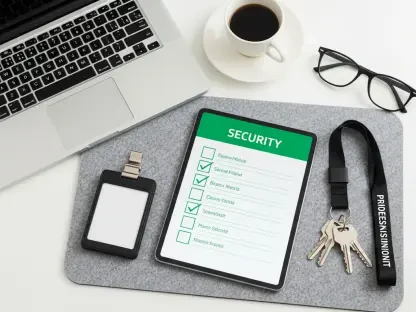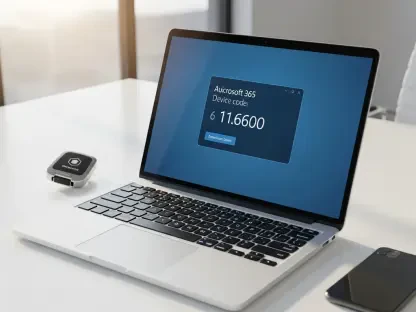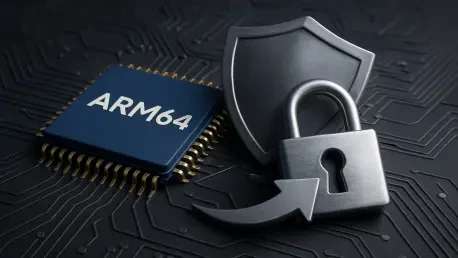

The enterprise landscape is rapidly embracing ARM64-based devices for their remarkable gains in performance and power efficiency, heralding a new chapter in mobile productivity and workforce flexibility. While this technological evolution promises significant advantages, it simultaneously introduces a critical, often overlooked challenge: a widening security compatibility gap. As organizations steadily transition toward a mixed-hardware environment, a pivotal question emerges—can the existing authentication infrastructure adapt to this new architecture, or does this progress inadvertently create new, unaddressed vulnerabilities? This shift is not a distant trend but a present-day reality, compelling IT and security leaders to reevaluate their strategies and ensure that their security posture remains robust and consistent across every device, regardless of the processor it runs. The failure to do so risks undermining the very benefits that these modern devices are meant to provide.
The Hidden Challenge of Hardware Modernization
The deliberate move toward ARM64 architecture is no longer a niche experiment but a core strategic decision for businesses aiming to equip their workforce with quieter, more powerful devices that offer significantly longer battery life. This accelerated adoption has resulted in IT departments managing an increasingly diverse and complex fleet of hardware, where traditional Intel and AMD systems operate alongside the latest ARM64-powered laptops and tablets. This technological heterogeneity, while beneficial for productivity, creates a substantial hurdle for security teams tasked with maintaining a uniform defense posture. The core of the problem lies in the fact that many established security protocols and hardware authenticators were developed long before the ARM64 architecture became a prominent force in the enterprise sector, leading to inherent incompatibilities that can disrupt daily operations and expose sensitive corporate data to new risks.
This hardware diversity presents a direct threat to established security frameworks, as legacy authentication methods, particularly those reliant on physical smart cards and USB security keys, frequently fail to function correctly on the ARM64 architecture. These compatibility issues are more than mere inconveniences; they can result in widespread authentication failures, preventing employees from accessing essential systems and applications, thereby hindering productivity. For IT departments, this translates into a management nightmare of inconsistent security policies, where different rules apply to different devices. Such inconsistencies ultimately weaken the organization’s overall security posture, creating seams that can be exploited by malicious actors. The challenge, therefore, is to modernize the authentication infrastructure at the same pace as the hardware it is meant to protect, ensuring that security remains a seamless and effective enabler of business rather than a fragmented and unreliable obstacle.
Bridging the Gap with Future-Ready Solutions
In response to this pressing challenge, forward-thinking security providers are introducing next-generation software meticulously designed for the new reality of mixed-architecture environments. The most effective approach centers on the deployment of a modern Smart Credential Minidriver that offers full, native support for the ARM64 platform. By engineering solutions that function with unwavering consistency across all contemporary Windows platforms, these providers effectively eliminate the compatibility roadblock that has plagued early adopters. This is not merely a patch or a workaround but a fundamental re-engineering of authentication software to be architecture-agnostic. Such a proactive measure allows organizations to future-proof their security infrastructure, ensuring that they can continue to adopt the best available hardware without ever compromising their security standards or introducing friction for their end-users.
The primary benefit of implementing a modern, cross-platform driver is the newfound ability to create and enforce a single, unified authentication policy across the entire organization. When the authentication process remains identical whether an employee is using an Intel-based desktop in the office, an AMD workstation at a remote site, or a new ARM64 tablet on the go, the complexity of security management is dramatically reduced. This consistency streamlines the workload for IT teams, minimizes support tickets related to access issues, and, most importantly, strengthens the overall security posture. By ensuring that every employee receives the same high-assurance protection regardless of their device, organizations can move beyond simply fixing a compatibility problem and begin to actively enhance their operational security, making it more resilient, manageable, and prepared for the technological shifts of tomorrow.
Integrating Security into the Modern Ecosystem
An effective authentication solution in today’s interconnected world cannot operate in isolation; it must be deeply woven into the fabric of the enterprise IT environment. Modern authentication drivers are therefore designed for seamless, native integration with core enterprise identity platforms, ensuring they function as a natural extension of existing systems. This includes built-in compatibility with essential Microsoft services such as Windows Hello for Business and Microsoft Entra ID. This level of integration enables frictionless yet highly secure sign-on experiences that fit directly into the established IT ecosystem without requiring disruptive, large-scale changes. By working with, rather than against, the modern enterprise framework, these solutions facilitate easier adoption, reduce implementation costs, and empower organizations to leverage their existing technology investments while simultaneously elevating their security capabilities.
Ultimately, readiness for the ARM64 shift involved maintaining uncompromising security and compliance standards. Organizations successfully navigated this transition by pairing updated, cross-platform software with proven hardware authenticators, such as PIV-compliant smart cards and USB security keys. This approach established a complete, end-to-end security solution where every component was optimized to work in concert. It was this strategic alignment of software and hardware that ensured security standards remained robust and capable of meeting the stringent requirements of regulated industries. The enterprises that thrived did not view this as a mere technical update but as a strategic imperative, a move that secured their digital assets, maintained operational continuity, and positioned them to confidently embrace the future of enterprise computing.