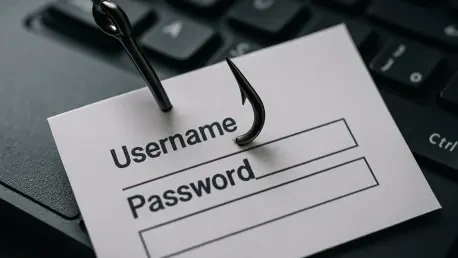

The familiar blue and white of a Microsoft login page has become a universal symbol of digital security, yet it is now the very camouflage used by cybercriminals to bypass an organization’s most robust defenses. A sophisticated new wave of phishing attacks is turning this trusted interface into a Trojan horse, exploiting a legitimate feature to gain complete and persistent access to Microsoft 365 accounts. This emerging threat sidesteps traditional security measures, proving that even multi-factor authentication is no longer an ironclad guarantee of safety. The core of the issue lies not in a broken password or a stolen credential, but in the manipulation of user consent through an authentication protocol designed for convenience.
How a Trusted Login Becomes a Gateway for Intrusion
The attack’s brilliance lies in its simplicity and reliance on user trust. An employee receives an email, perhaps about a “Salary Bonus” or an urgent security update, prompting them to authorize a new device. The link directs them not to a sketchy replica, but to Microsoft’s official microsoft.com/devicecode login page. Believing the request is legitimate, the user enters a one-time code provided by the attacker.
This single action, performed on a legitimate website, is all it takes to authorize the attacker’s malicious application. The system, functioning as designed, grants the application an access token tied to the user’s account. With this token, the threat actor gains persistent access to emails, files, and other sensitive data within the M365 environment. Multi-factor authentication is rendered irrelevant because the user, not a stolen password, granted the final approval.
Outsmarting Modern Security Beyond the Password
As organizations have strengthened their defenses with MFA, attackers have pivoted from simple password theft to more advanced session hijacking techniques. This evolution led them directly to OAuth 2.0, an open standard for access delegation commonly used to link applications or sign into devices like smart TVs without sharing passwords. The “device authorization grant” feature within OAuth is specifically designed for such input-limited devices, creating a seamless user experience.
However, this push for passwordless convenience has inadvertently created a powerful new attack vector. Threat actors recognized that the user-friendly device code flow could be co-opted for malicious purposes. By initiating the process themselves and tricking a user into completing the final step, they exploit the very protocol designed to enhance modern, secure logins. The convenience feature has become a critical vulnerability.
Anatomy of Deception When a Feature Becomes a Flaw
The attack unfolds in a carefully orchestrated sequence. First, an attacker uses a malicious application to request access to a Microsoft 365 API, which generates the eight-digit device code. Next, they employ social engineering to deliver this code to the target, often through phishing emails containing QR codes, hyperlinks, or embedded buttons disguised as document links or system alerts.
The unsuspecting user follows the prompt, navigates to the official Microsoft page, and enters the code. This act of consent is the linchpin of the entire operation. By entering the code, the user is not just logging in; they are explicitly granting the attacker’s application permission to access their account data. This approval creates a persistent access token that allows the attacker to operate within the victim’s account long after the initial compromise, completely bypassing MFA protocols on subsequent logins.
The Arsenal and Actors in the Phishing Ecosystem
This sophisticated attack is no longer confined to elite hacking groups. The proliferation of user-friendly phishing kits has democratized the technique, making it accessible to a wide range of threat actors. Tools like “SquarePhis##” and the free “Graphish” framework automate the process of generating device codes and crafting convincing lures, lowering the technical barrier for entry significantly.
Consequently, a diverse array of cybercriminals is now leveraging this method. Financially motivated groups, such as TA2723, use it for monetary gain, while suspected state-aligned actors, including the Russia-linked UNK_AcademicFlare, employ it for espionage and intelligence gathering. Their targets are equally varied, spanning U.S. government agencies, European transportation firms, and academic institutions, demonstrating the widespread appeal and effectiveness of this technique.
Alarming Trends Confirmed by Cybersecurity Research
Recent analysis has confirmed a “significant and concerning surge” in these OAuth-based attacks, validating fears across the cybersecurity community. The data highlights a clear and overarching trend: threat actors are becoming increasingly adept at weaponizing legitimate authentication features for malicious ends. Instead of trying to break through fortified walls, they are simply walking through the front door using keys handed to them by unsuspecting users.
The evidence points to a rapid and widespread adoption of this tactic across the threat landscape. The numbers show that what was once a niche method is quickly becoming a standard tool in the modern phishing playbook. This shift underscores the continuous cat-and-mouse game between defenders and attackers, where innovations in security are met with equally innovative methods of circumvention.
Bolstering the Digital Fortress Against OAuth Abuse
To counter this threat, organizations must adopt a multi-layered defense strategy. Administrators can harden their Microsoft 365 environment by implementing stricter controls on OAuth application consent, limiting which applications users can authorize, and actively monitoring for suspicious permission grants. Regular audits of authorized applications are essential to detect and revoke illicit access tokens before significant damage can be done.
Ultimately, the most critical line of defense is the human firewall. Employee training must evolve to address this specific threat, teaching users to adopt a zero-trust policy toward any unsolicited request for device authorization codes. Staff should be empowered to recognize the red flags, such as unexpected login prompts or requests to authorize access from unknown applications.
These proactive measures were crucial for organizations that successfully navigated the evolving threat landscape. They understood that security was no longer just about protecting passwords but also about managing consent and educating users on the sophisticated social engineering tactics that defined modern cyberattacks. This holistic approach proved to be the most effective defense against attackers who had learned to turn trust into their most powerful weapon.