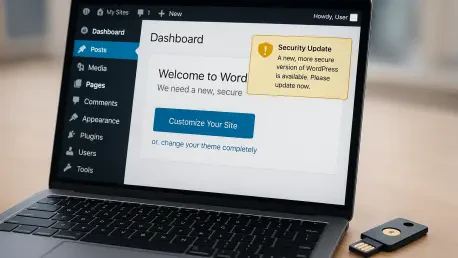

Under the Australian Notifiable Data Breaches scheme, a compromise involving hijacked administrative two-factor credentials triggers mandatory reporting obligations that small businesses often overlook until a breach occurs. This reality underscores the gravity of the recently identified vulnerability in the Google Authenticator plugin for WordPress, tracked as CVE-2026-14204. While two-factor authentication is widely regarded as a cornerstone of modern cybersecurity, a flaw within the implementation of the plugin itself can inadvertently create a secondary vector for account takeover. Cross-Site Request Forgery, or CSRF, represents a significant threat because it exploits the trust that a web application has in a user’s browser. In the context of an authentication plugin, this vulnerability allows an unauthorized actor to bypass the very security layer intended to protect the site. By tricking a logged-in administrator into clicking a malicious link or visiting a compromised third-party page, an attacker can silently modify the shared secret used to generate one-time passwords. This effectively locks the legitimate user out of their own account while granting the attacker the ability to generate valid codes, thereby neutralizing the protective benefits of multi-factor security.
The technical landscape of 2026 has seen a surge in sophisticated social engineering attacks that specifically target administrative sessions in content management systems. As WordPress continues to power a vast majority of the web, the plugins used to secure these environments are under constant scrutiny by both researchers and malicious actors. The remediation process for CVE-2026-14204 is not merely about clicking an update button; it involves a comprehensive understanding of how session tokens and nonces interact within the WordPress ecosystem. Organizations must adopt a methodical approach to identifying exposure, securing data, and verifying the integrity of their authentication stack. This involves a coordinated effort across technical teams to ensure that the patch is applied correctly across all managed environments, ranging from single-site installs to massive multisite networks. Failure to address this flaw promptly leaves the door open for persistent access, as a hijacked two-factor secret is often more difficult to detect than a compromised password, given that the underlying credentials appear valid to the server’s security logs.
1. Verify the Plugin Is Currently Active on Your Site
The first step in any vulnerability management cycle is accurately identifying the assets within the environment that are susceptible to the specific threat. Given the popularity of the Google Authenticator brand, the WordPress repository contains several plugins with similar names, which can lead to confusion during the audit process. Administrators must confirm that they are running the specific plugin with the slug “google-authenticator,” originally maintained by Henrik Schack. This is a critical distinction because other plugins offering similar time-based one-time password functionality may not be affected by CVE-2026-14204, or they may have entirely different patching schedules. To verify the plugin’s presence, one should navigate to the administrative dashboard and inspect the list of active extensions. If the plugin is installed but deactivated, it should still be prioritized for an update or removed entirely to prevent it from being used as an entry point if it were to be reactivated during a future maintenance cycle.
Beyond the graphical interface, technical practitioners should utilize standardized tools to inventory their sites, ensuring that no shadow installations exist. In many complex hosting environments, developers may have bundled authentication plugins into custom themes or as part of a pre-configured site blueprint. Checking the physical directory structure located at wp-content/plugins/ provides the most definitive evidence of the plugin’s existence. By searching for the directory named exactly “google-authenticator,” an administrator can rule out false positives from similarly named security suites. It is also important to verify whether the plugin is being managed at the network level in a WordPress Multisite installation. In such cases, the plugin might not appear on the individual site’s dashboard but could still be active and vulnerable across the entire network. Ensuring that the plugin is actually in use allows the team to allocate resources effectively and avoid unnecessary downtime on sites that rely on different multi-factor authentication providers or custom-built security solutions.
2. Compare the Installed Version Against the 0.56 Benchmark
Once the plugin has been identified, the next logical phase is to determine the specific version currently operating in the production environment. CVE-2026-14204 specifically targets all releases of the Google Authenticator plugin prior to version 0.56. The vulnerability stems from a lack of proper nonce verification during the process of saving a user’s two-factor secret. A nonce, or “number used once,” is a unique token generated by WordPress to ensure that a request was intentionally initiated by the user and not forged by a third party. Without this check, the plugin cannot distinguish between a legitimate update to a user’s security settings and a malicious request sent by an attacker’s script. Version 0.56 introduced the necessary validation logic to close this gap, making it the minimum viable version for a secure installation. Administrators must look for the version number listed next to the plugin name in the WordPress management interface or within the plugin’s main PHP file header to confirm their current standing.
Understanding the severity of the version mismatch is vital for prioritizing the remediation. The Common Vulnerability Scoring System (CVSS) provides a framework for evaluating the impact of such flaws, and with a score of 6.5, this CSRF bug is categorized as a medium-to-high risk. The primary impact is the potential for an integrity loss, where an attacker can overwrite the secret key used for generating time-based one-time passwords. This means that even if a site owner has a strong, unique password, the second factor of authentication becomes a liability rather than a safeguard. If the version check reveals any number below 0.56, the site should be considered actively exposed. This comparison should be documented as part of the organization’s compliance record, demonstrating that the vulnerability was recognized and that the move toward version 0.56 was a calculated security decision. This record-keeping is especially important for entities operating under strict regulatory frameworks that require proof of proactive vulnerability management and timely patching.
3. Perform a Full Backup Before Modifying Any Files
Before any changes are made to a production system, a comprehensive backup is non-negotiable to protect against unforeseen data loss or site instability. Modifying authentication components carries an inherent risk of locking administrators out of the system if the update fails or if the database becomes inconsistent. A full backup must encompass two distinct areas: the physical file system and the relational database. The file system contains the WordPress core, themes, and plugins, while the database holds all user metadata, including the very two-factor secrets being discussed. Utilizing professional-grade backup solutions that offer point-in-time recovery is highly recommended. For those using cloud-based hosting providers, taking a manual snapshot of the entire virtual machine or container provides a robust safety net that allows for a complete “undo” of the update process if the new version of the plugin conflicts with the existing environment’s PHP configuration or other active plugins.
The integrity of the backup is just as important as the backup itself. Administrators should verify that the backup files are not only created but are also stored in a secure, off-site location that is not directly accessible from the web server. This prevents a scenario where a compromised site leads to the deletion or corruption of its own recovery points. In the context of WordPress, the database backup should specifically ensure that the usermeta table is included, as this is where the Google Authenticator plugin stores the secret keys. If an update were to fail mid-process, an administrator might find that the plugin is patched but the underlying data is corrupted, leading to a situation where no one can log in. By having a verified backup ready, the technical team can proceed with the update with the confidence that any service interruption can be resolved within minutes. This disciplined approach to data preservation is what separates professional systems administration from ad-hoc site management, ensuring that security improvements do not inadvertently result in extended downtime for the business.
4. Apply the Update Using the WordPress Administrative Dashboard
For the majority of site owners, the most direct path to remediation is through the built-in update mechanism provided by the WordPress administrative interface. This system is designed to be user-friendly and handles the heavy lifting of downloading the updated package, extracting the files, and replacing the outdated code. Once logged into the dashboard, an administrator should navigate to the “Updates” screen or the “Plugins” page. A notification will typically appear indicating that a new version of the Google Authenticator plugin is available. By selecting the plugin and clicking the “Update” button, the site initiates a secure connection to the official WordPress.org repository. This automated process ensures that the files are fetched from a trusted source and that the file permissions are set correctly according to the server’s configuration. It is a streamlined workflow that minimizes the risk of human error during the file replacement phase of the patch.
While the dashboard update is efficient, it requires a successful connection to the WordPress core services and sufficient disk space on the server to handle the temporary files created during the extraction process. Administrators should monitor the update progress for any error messages, such as “Update Failed” or “Connection Timed Out,” which could indicate an underlying issue with the hosting environment’s connectivity or file write permissions. After the dashboard confirms a successful update, it is crucial to refresh the page and verify that the plugin version now reflects 0.56 or higher. This manual verification step ensures that the update actually took effect and that the site is no longer running the vulnerable code. If the dashboard update hangs or fails repeatedly, it may be a sign of a deeper conflict, such as a security plugin blocking the outgoing request or an aggressive caching layer serving an outdated version of the plugin list, necessitating the use of the alternative update methods discussed in subsequent sections.
5. Execute the Update Through WP-CLI for Increased Efficiency
In a professional DevOps environment where efficiency and automation are paramount, the WordPress Command Line Interface (WP-CLI) offers a much more powerful alternative to the graphical dashboard. WP-CLI allows administrators to manage their WordPress installations directly from the terminal, bypassing the overhead of the web browser and the administrative UI. This is particularly beneficial for those managing high-traffic sites or clusters of installations where speed is essential. To apply the patch via the command line, one simply needs to navigate to the WordPress root directory and execute a single command to update the plugin. This method is not only faster but also provides detailed output in real-time, allowing the administrator to see exactly what the system is doing, from fetching the new archive to cleaning up the old plugin files. It eliminates the latency associated with rendering a web page and provides a clean, text-based log of the update process.
Furthermore, WP-CLI’s real strength lies in its ability to be scripted and integrated into larger maintenance workflows. For a technician responsible for dozens of client sites, running a bash loop that executes the update command across every directory is far more reliable than logging into each dashboard individually. This approach ensures a consistent state across the entire fleet of sites and reduces the window of opportunity for attackers to exploit the CSRF vulnerability while an administrator is busy clicking through menus. Scripting the update also allows for the inclusion of pre-update checks, such as verifying the PHP version or checking for existing backups, all within a single automated routine. By leveraging these modern command-line tools, organizations can maintain a higher standard of security posture with less manual effort, ensuring that critical patches like the one for CVE-2026-14204 are deployed as soon as they become available in the repository.
6. Conduct a Manual Update Over SFTP if Automatic Updates Are Restricted
There are certain scenarios where neither the WordPress dashboard nor the command-line interface can be used to apply a patch, often due to strict server hardening or restricted network environments. In these cases, a manual update via Secure File Transfer Protocol (SFTP) remains the most reliable fallback. This process involves downloading the latest version of the Google Authenticator plugin (version 0.56 or later) directly from the official WordPress plugin repository onto a local workstation. Once the archive is downloaded and extracted, the administrator must connect to the server using an SFTP client, which provides an encrypted tunnel for file transfers. Navigating to the wp-content/plugins/ directory on the remote server allows the user to see the existing “google-authenticator” folder. By replacing the contents of this folder with the newly downloaded files, the administrator manually overwrites the vulnerable code with the patched version, ensuring that the fix is applied regardless of the site’s internal update settings.
Precision is paramount during a manual SFTP update to avoid breaking the plugin’s functionality or leaving the site in an inconsistent state. It is generally recommended to rename the old plugin folder to something like “google-authenticator-old” before uploading the new version, rather than simply merging the files. This ensures that no orphaned files from the previous, vulnerable version remain in the directory, as these could potentially be accessed or exploited. Once the new files are in place, the administrator can verify the site’s functionality and then delete the old folder. This manual approach is also useful for troubleshooting environments where automatic updates consistently fail due to permission issues, as it allows for the explicit setting of file ownership and permissions during the upload process. While more time-consuming than automated methods, mastering the manual update process is an essential skill for any web professional, providing a guaranteed way to secure a site when other tools are unavailable.
7. Require Every User To Re-Register Their Two-Factor Secrets
Patching the software is only the first half of the remediation process; the second half involves addressing the potential damage that may have already occurred while the vulnerability was live. Because CVE-2026-14204 allowed for the silent overwriting of a user’s two-factor secret, simply updating the plugin to version 0.56 does not automatically fix a compromised secret. If an attacker has already succeeded in replacing a legitimate user’s key with one they control, the updated plugin will continue to use that malicious key for authentication. Therefore, administrators must take the proactive step of requiring every user who has two-factor authentication enabled to re-register their devices. This process begins with identifying the metadata key used by the plugin to store the secret, which is typically found in the usermeta table. By clearing these specific values from the database, the site forces the plugin to recognize that the user no longer has a valid 2FA setup, prompting them to scan a new QR code upon their next login.
This re-registration phase must be handled with clear communication and a focus on user experience to avoid mass confusion or accidental lockouts. Users should be notified ahead of time that their two-factor settings are being reset for security reasons and that they will need their authenticator apps ready for their next session. From a technical standpoint, this can be done via a custom SQL query or a WP-CLI command that targets the specific meta keys for all users. Once the old, potentially compromised secrets are purged, the system is essentially reset to a “known good” state. When users log in and re-scan the newly generated QR codes, they are creating fresh secrets that are now protected by the nonce-verified logic of the updated plugin. This clean break from the past is the only way to guarantee that no residual access remains for an attacker who might have exploited the vulnerability before the patch was applied, providing a high level of assurance for the site’s ongoing security.
8. Deploy a Hardening MU-Plugin for Layered Defense Against CSRF
Modern cybersecurity philosophy emphasizes defense-in-depth, which suggests that relying on a single patch is often insufficient for long-term protection. To augment the official fix for CVE-2026-14204, administrators can deploy a “Must-Use” (mu-plugin) that provides an additional layer of security specifically targeting CSRF attempts on sensitive administrative actions. A mu-plugin is a PHP script placed in the wp-content/mu-plugins/ directory, which WordPress loads automatically before any regular plugins. This makes it an ideal location for security hardening logic that cannot be deactivated or bypassed from the WordPress dashboard. By creating a custom script that globally checks for the presence of valid nonces on any request attempting to modify user security settings, an administrator can create a permanent safety net. Even if a future version of the Google Authenticator plugin—or any other security plugin—were to accidentally re-introduce a similar bug, the mu-plugin would stand as a sentinel to block the unauthorized request.
The logic within this hardening plugin should be designed to fail safely, meaning that if it cannot verify the legitimacy of a request, it should block the action and log the event for administrative review. This not only prevents exploitation but also provides valuable telemetry data regarding potential attacks against the site. For instance, if the mu-plugin starts logging a high volume of blocked requests originating from a specific IP address or targeting a particular user account, it serves as an early warning system for a coordinated social engineering campaign. This approach moves beyond reactive patching and toward a proactive security posture, where the environment itself is hardened against common attack classes like CSRF. Implementing such layered defenses is a hallmark of mature web operations, ensuring that the site remains resilient even as the threat landscape evolves and new vulnerabilities are discovered in the underlying software stack.
9. Use a Single Script To Inspect All Sites Under Your Management
For agencies and enterprises managing dozens or hundreds of WordPress installations, manual inspection is an inefficient and error-prone strategy. The most effective way to handle a widespread vulnerability like CVE-2026-14204 is to develop and deploy a centralized audit script that can scan the entire portfolio in a single pass. Such a script can be written in Bash or Python and utilize WP-CLI to query each site for its current plugin version and status. By iterating through a list of server paths or site URLs, the script can generate a comprehensive report highlighting which sites are patched, which are vulnerable, and which do not have the plugin installed at all. This birds-eye view allows security teams to prioritize their efforts, focusing first on high-value sites or those with the largest number of administrative users. It also provides a clear roadmap for the remediation project, ensuring that no site is overlooked during the patching cycle.
The utility of an audit script extends beyond just finding the vulnerable version; it can also be used to verify the successful application of the patch and the subsequent clearing of user secrets. After the update commands have been run, the script can be executed again to confirm that every site in the network now reports version 0.56 or later. This automated verification is crucial for compliance reporting, providing a timestamped record that the organization took immediate and effective action to mitigate the risk. Furthermore, this script can be archived and repurposed for future vulnerability disclosures, creating a repeatable process for rapid response. In the fast-paced world of 2026 cybersecurity, the ability to pivot from a vulnerability announcement to a full-portfolio audit in a matter of minutes is a significant competitive advantage, reducing the time-to-remediation and minimizing the window of exposure for both the organization and its clients.
10. Test the Patch To Ensure the Vulnerability Is Closed
Validation is the final step in the technical remediation of CVE-2026-14204, ensuring that the theoretical fix translates into actual security in the production environment. Testing should be performed using a non-privileged test account that has been granted administrative access specifically for the duration of the audit. An administrator can simulate a CSRF attack by crafting a request that attempts to save a new two-factor secret without including the mandatory WordPress nonce. This can be done using browser-based developer tools or a specialized API testing client. If the patch has been applied correctly, the server should reject this request with a 403 Forbidden error or a WordPress-specific security warning. If the request succeeds and the secret is updated, it indicates that either the patch was not applied correctly, or there is a configuration issue, such as an aggressive cache or a load balancer, that is serving the old, vulnerable version of the plugin.
In addition to testing for the absence of the vulnerability, it is equally important to test the functionality of the legitimate login process. An administrator should verify that after re-registering their device, they can still successfully log in using a valid time-based one-time password generated by the Google Authenticator app. This ensures that the security hardening has not introduced a “denial of service” for legitimate users by being overly restrictive. Testing should also encompass edge cases, such as users with multiple devices or those who rely on backup codes. By conducting thorough end-to-end testing, the technical team can confirm that the site is not only secure against the CSRF flaw but also remains fully operational for its intended users. This phase of the project provides the final assurance needed to close the incident response ticket and move back into a standard monitoring state, confident that the immediate threat has been neutralized.
11. Implement Persistent Monitoring To Identify New Threats Quickly
The conclusion of a patching project should never be seen as the end of security efforts, but rather as a transition into a more vigilant monitoring phase. Given the dynamic nature of WordPress security, new vulnerabilities are constantly being discovered, and staying ahead of them requires a persistent, automated approach to monitoring. Organizations should subscribe to reputable security feeds, such as the WPScan Vulnerability Database or official vendor mailing lists, to receive immediate alerts when new CVEs are published. Integrating these alerts into the team’s communication channels, such as Slack or Microsoft Teams, ensures that the relevant personnel are notified the moment a threat is identified. This proactive information gathering allows the team to begin the remediation process long before an attacker has the chance to develop and deploy an exploit for a newly disclosed flaw.
Beyond external alerts, internal monitoring tools should be configured to track changes to the site’s file system and plugin status. Tools that offer file integrity monitoring can alert administrators if a plugin’s code is modified unexpectedly, which could indicate a successful exploit or an unauthorized change. Additionally, logging all authentication-related events, including successful logins, failed attempts, and changes to two-factor settings, provides a vital audit trail for forensic analysis. In the event of a future security incident, these logs will be the primary source of information for determining the scope and impact of the breach. By establishing a culture of continuous monitoring and rapid response, organizations can significantly reduce their overall risk profile. This persistent oversight ensures that the lessons learned from patching CVE-2026-14204 are applied to the entire security lifecycle, creating a more resilient and informed web operations team prepared for the challenges of the coming years.
12. Reinforce Your General Two-Factor Authentication Security Measures
Building on the specific remediation of the Google Authenticator CSRF flaw, administrators should take the opportunity to strengthen their broader authentication posture. Security is most effective when it is multi-layered, and there are several general best practices that can further protect administrative accounts from compromise. First, the use of recovery codes should be mandated for all users who have 2FA enabled. These one-time-use codes provide a safe way for users to regain access to their accounts if they lose their mobile device, preventing them from being permanently locked out while also reducing the need for manual administrative intervention. Furthermore, enforcing the use of HTTPS across the entire site is essential, as it protects the integrity of the session cookies that CSRF attacks attempt to exploit. Without a secure, encrypted connection, even a patched plugin can be undermined by other classes of attacks, such as session hijacking or man-in-the-middle interceptions.
Another powerful reinforcement strategy is the implementation of rate limiting on all authentication endpoints. By restricting the number of login attempts or 2FA verification requests that can be made from a single IP address within a certain timeframe, an organization can effectively neutralize brute-force and credential-stuffing attacks. This layer of protection is particularly important in 2026, as automated attack bots have become increasingly sophisticated. Additionally, administrators should consider adopting hardware-based security keys, such as those following the FIDO2 standard, as a more robust alternative to TOTP-based authentication for high-value accounts. These physical keys are inherently resistant to phishing and CSRF because they require a physical interaction that cannot be easily spoofed by a remote script. By combining these general security measures with the specific fixes for identified vulnerabilities, organizations can create a formidable defense that protects their digital assets against both known and unknown threats, ensuring a secure and stable environment for their users and stakeholders.
Building a Resilient Authentication Strategy for the Future
The successful mitigation of CVE-2026-14204 was achieved through a disciplined sequence of verification, backup, and systematic updates. Administrators across the industry adopted these protocols to ensure that their WordPress installations remained secure against the evolving threat of Cross-Site Request Forgery. By moving to version 0.56 and clearing potentially compromised user secrets, organizations effectively neutralized the immediate risk of account takeover. This process highlighted the critical importance of keeping security-focused plugins updated and reinforced the value of having a documented incident response plan. The lessons learned during this patching cycle were quickly integrated into broader security frameworks, ensuring that similar flaws in other authentication components were identified and addressed with the same level of professional rigor.
In the period following the disclosure, practitioners focused on long-term resilience by implementing layered defenses and automated monitoring tools. The deployment of hardening mu-plugins and the use of centralized audit scripts became standard practices for managing large-scale WordPress environments. These proactive measures ensured that the security posture of the managed sites was not only restored but significantly improved. Technical teams across the globe successfully transitioned from reactive patching to a more sophisticated model of continuous vulnerability management. This shift in strategy proved instrumental in protecting sensitive data and maintaining the trust of users, as the community at large recognized that security is an ongoing commitment rather than a one-time fix.