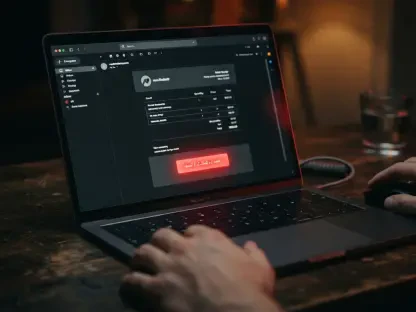

The routine act of connecting to a hotel or airport Wi-Fi network has transformed into a high-stakes gamble for corporate travelers and government officials alike. As individuals navigate the familiar prompts of a captive portal to gain internet access, they often overlook the subtle signs of a sophisticated interception attempt. Midnight Blizzard, a threat actor known for its ties to Russian intelligence, has refined these techniques to exploit the inherent trust placed in public infrastructure. By inserting themselves into the communication stream between a user and the local access point, these operatives can mirror legitimate authentication screens precisely. This shift in strategy highlights a departure from traditional phishing emails toward localized, physical-proximity attacks that catch even security-conscious professionals off guard. The vulnerability lies not in the encryption of traffic, but in the initial handshake where tokens are often exchanged in plain sight.
Tactics of the Modern Espionage Campaign
Rogue Infrastructure: The Captive Portal Lure
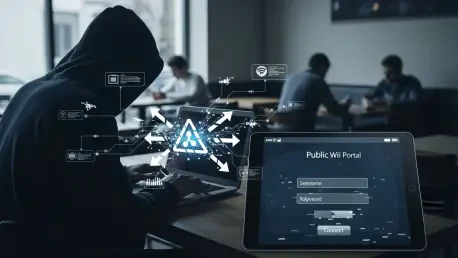
The primary objective of these campaigns involves the deployment of localized infrastructure that intercepts Domain Name System requests or redirects traffic through a rogue access point. When a traveler enters a high-traffic area like a major international airport, their device automatically searches for known SSIDs or prompts for a connection to an open guest network. Midnight Blizzard leverages this behavior by deploying portable hardware that mimics the expected SSID of the venue, effectively drawing users into a controlled environment. Once connected, the user is presented with a captive portal that appears identical to the official landing page of the venue. This deceptive interface often requests a login via a Microsoft 365 or Google Workspace account under the guise of providing high-speed access. This manipulation relies on the user’s immediate need for connectivity, which often overrides their typical caution regarding credential entry on unfamiliar login pages.
Token Theft: Bypassing Advanced Authentication
Technical sophistication in these attacks is shown by the integration of automated tools that can detect the specific browser and operating system of a target device in real-time. This fingerprinting allows Midnight Blizzard to serve tailored phishing payloads that align perfectly with the user’s expected interface, reducing the likelihood of detection. For instance, an iPhone user might see a perfectly rendered Apple ID prompt, while a Windows user is met with a familiar Entra ID login screen. The backend infrastructure utilized by the attackers is often hosted on compromised legitimate websites or low-reputation cloud services, making it difficult for traditional web filters to flag the activity as malicious. Furthermore, the use of automated scripts ensures that once a token is captured, it is immediately utilized to enumerate the victim’s organizational structure. This rapid cycle minimizes the window for security teams to detect the compromise and revoke the session.
Strategic Defense and Mitigation Measures
Technological Controls: Hardening the Network Perimeter
Defending against these localized threats requires a multi-layered approach that combines advanced endpoint protection with strict organizational policies regarding public network usage. Security teams must prioritize the deployment of Always-On VPN solutions that encrypt all traffic from the moment a device connects to any network, effectively bypassing the rogue captive portals. Additionally, the implementation of device-bound passkeys or hardware security keys significantly reduces the risk of token theft, as these methods do not rely on shareable secrets that can be intercepted. Organizations should also consider utilizing mobile device management software to disable the auto-join feature for open Wi-Fi networks, forcing users to manually vet each connection. Education remains a critical component, but it must be supplemented by technical controls that remove the burden of detection from the end user. Shifting toward zero-trust architecture ensures that every connection is verified regardless of its origin.
Future Resilience: Shifting to Zero Trust Standards
The recent evolution of Midnight Blizzard’s tactics demonstrated that the perimeter of corporate security has effectively expanded to every hotel lobby and transit hub globally. To counter these persistent threats, administrators shifted their focus toward implementing certificate-based authentication and restricted network profiles that prevented devices from interacting with unverified captive portals altogether. It became clear that relying on user awareness was insufficient against targeted technical interceptions, leading to the widespread adoption of micro-segmentation at the application layer. Those who successfully navigated these challenges integrated real-time threat intelligence into their identity providers to automatically flag suspicious login locations and unusual session characteristics. Resilient organizations treated every public access point as inherently compromised and mandated the use of private cellular hotspots or satellite-based connectivity for work. This change ensured that physical proximity was no longer a viable path.