
Enforcing conditional access policies that evaluate the health of a device and its geographic location before granting access adds an essential layer of context-aware security to cloud environments. As organizations navigate the complex digital landscape of 2026, the sheer volume of credential-based attacks has reached an all-time high, driven by automated phishing kits and sophisticated social engineering. Relying on simple passwords or even traditional multi-factor authentication methods like SMS codes has proven insufficient against modern adversaries who utilize session hijacking and real-time proxy tools. Today, security leaders must recognize that an identity is only as secure as the environmental signals accompanying it. By integrating telemetry from endpoint detection systems and network egress points, businesses can create a dynamic perimeter that adapts to the risk level of every single login attempt. This proactive stance shift is no longer optional but a fundamental requirement for maintaining data integrity in a cloud-first world.
Modernizing Authentication and Identity Verification Resilience
Modern Standards: Transitioning to Phishing-Resistant Authentication
The primary defense against modern credential theft involves a decisive shift away from phishable authentication factors toward cryptographically secure methods like FIDO2 and passkeys. Traditional multi-factor authentication, while an improvement over simple passwords, often relies on one-time codes or push notifications that can be easily intercepted or manipulated by sophisticated phishing proxies. In contrast, phishing-resistant protocols ensure that the authentication process is uniquely bound to the specific website or service the user is attempting to access. This prevents attackers from using stolen credentials on a different domain, as the underlying cryptographic handshake will fail if the origin does not match. From 2026 to 2027, many leading cloud providers have made these standards the default, requiring users to verify their identity through local biometrics or hardware security keys. This technical evolution fundamentally changes the economics of cybercrime by making phishing significantly more difficult and far less profitable.
Advanced Strategy: Incorporating Behavioral and Environmental Signals
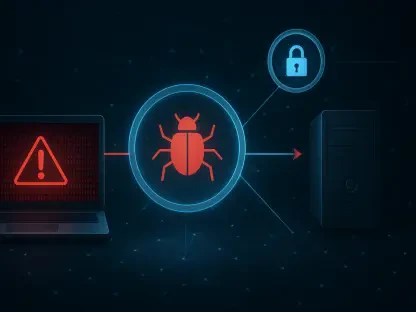
Beyond individual login events, a robust cloud security strategy now requires the continuous monitoring of environmental signals to detect session hijacking or token theft. Even when an initial authentication is successful, the subsequent session token remains a high-value target for attackers who use specialized malware to extract browser cookies. To mitigate this risk, modern systems implement token binding and short-lived session durations that require frequent, transparent re-verification based on device health. For example, if a device suddenly shows signs of malware infection or if the network connection shifts to a known high-risk IP range, the conditional access engine can immediately terminate the session and trigger a fresh authentication challenge. This level of granular control ensures that access remains contingent on the sustained security posture of the user’s environment. Integrating these behavioral analytics allows businesses to spot deviations from established patterns and provides an early warning system.
Strengthening Infrastructure and Proactive Defense Mechanisms
Infrastructure Defense: Protecting the Management Plane and Privileged Accounts
Protecting the cloud management plane is arguably the most critical component of a comprehensive defense strategy, as administrative credentials provide the keys to the entire digital kingdom. Privileged accounts should never be static; instead, organizations are increasingly adopting just-in-time access models where permissions are granted only for specific tasks and for a limited duration. This approach minimizes the window of opportunity for an attacker to exploit a compromised administrative identity. Furthermore, securing the administrative console requires dedicated workstations that are isolated from standard business activities like email or general web browsing. By using hardware-isolated virtual machines or dedicated physical devices for cloud management, businesses can prevent credential-stealing malware from reaching the most sensitive parts of their infrastructure. Additionally, implementing dual-approval workflows for high-impact changes ensures that no single compromised account can cause widespread damage.
Operational Resilience: Evaluating the Success of Modern Security Frameworks
Forward-thinking enterprises that prioritized the elimination of shared secrets and implemented hardware-backed security successfully reduced their attack surface by nearly eighty percent over the past two years. By transitioning to FIDO2-compliant passkeys and enforcing strict device compliance, these organizations effectively neutralized the threat of adversary-in-the-middle attacks. Security teams also benefited from automated orchestration tools that instantly isolated compromised accounts based on behavioral anomalies, rather than waiting for manual intervention. Moving forward, the focus shifted toward the total deprecation of legacy authentication protocols that lack support for modern encryption standards. Leaders who championed this transition secured their cloud infrastructure against the most persistent threats of the current era. Implementing these changes required a cultural shift toward zero-trust principles, but the resulting resilience provided a stable foundation for digital growth from 2026 to 2028 and beyond.