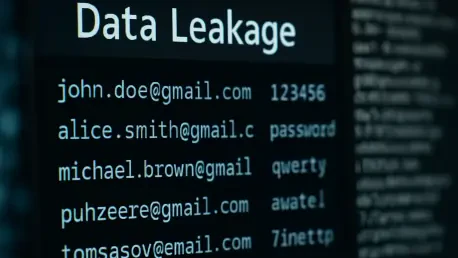

A security incident of staggering proportions came to light in January 2026, revealing that a publicly accessible dataset contained the usernames and passwords for an estimated 48 million Gmail accounts. This massive collection of credentials was part of an even larger dump totaling 149 million login records, all harvested by sophisticated infostealer malware and left exposed on an unsecured server. The discovery immediately sent ripples through the cybersecurity community, as the availability of such a vast trove of validated credentials created an imminent threat of widespread credential-stuffing attacks, identity theft, and significant corporate security breaches for organizations utilizing Google Workspace. The ease with which anyone could download these sensitive files underscores a critical vulnerability in the digital ecosystem, where a simple configuration error can have global consequences, potentially affecting millions of internet users and enterprises who rely on Google’s services for daily communication and operations.
1. The Anatomy of the Breach
The breach originated not from a direct attack on Google’s infrastructure but from a distributed and insidious form of malware known as an infostealer, which operates silently on compromised Windows machines. This type of malicious software is designed to capture sensitive information directly from a user’s device, including login credentials saved in web browsers, system files, and application data. Once the malware harvested the usernames and passwords, it aggregated the data and uploaded it to a centralized cloud storage location. The critical failure occurred when this storage bucket was inadvertently configured for public access, effectively leaving the digital door wide open. This oversight allowed the entire collection of stolen data to be downloaded by anyone who discovered its location, transforming a targeted malware campaign into a large-scale public data leak without requiring any sophisticated hacking techniques to access the information. This incident highlights how a simple human error in cloud security can exponentially amplify the damage caused by malware infections.
Security researchers made the discovery while conducting routine monitoring of underground forums and marketplaces where stolen data is often traded or discussed. They identified a link to an unprotected dataset hosted on a popular public file-sharing website, a location not typically used for such sensitive information, suggesting a possible mistake by the threat actors themselves. A closer analysis of the data revealed its immense scale and scope, containing approximately 149 million credential pairs in total. While the 48 million Gmail and Google Workspace accounts represented the largest single concentration of data, the leak also included login information for a wide array of other popular online services, including Facebook, Instagram, and Netflix. This diverse collection of credentials makes the dataset particularly valuable to malicious actors, as it provides them with the keys to unlock vast segments of an individual’s digital life, far beyond a single platform, creating a multifaceted security crisis for affected users worldwide.
2. Widespread Impact and Corporate Exposure
The most immediate and widespread threat stemming from this exposure is the high probability of automated credential-stuffing attacks. In these attacks, cybercriminals use bots to systematically test the leaked username and password combinations across hundreds of other websites and services. Because password reuse remains a common practice among users, a valid credential pair for a Gmail account is likely to grant access to banking, social media, e-commerce, and other sensitive accounts. This domino effect significantly amplifies the initial damage of the leak, turning a single compromised account into a cascade of security breaches across a user’s entire digital footprint. Furthermore, access to a primary email account like Gmail often serves as a master key. An attacker in control of a user’s inbox can initiate password resets for nearly any other service linked to that email address, intercept sensitive communications, and gather personal information that can be used for sophisticated identity theft or financial fraud schemes.
For businesses and other organizations, the implications are equally severe, particularly for those that rely on Google Workspace for their core operations. If an employee’s credentials are included in the leak and their account is not protected by multi-factor authentication (MFA), it can provide a direct entry point for attackers into a corporate network. This unauthorized access could expose confidential company data, proprietary intellectual property, customer information, and internal communications. A single compromised employee account can serve as a foothold for a much broader attack, allowing threat actors to move laterally within the network, escalate their privileges, and potentially deploy ransomware or exfiltrate massive amounts of sensitive data. This incident serves as a stark reminder that an organization’s security perimeter is often only as strong as the personal security practices of its employees, and it underscores the absolute necessity of enforcing stringent security policies, such as mandatory MFA, to mitigate such risks.
3. A Lasting Digital Shadow
This event served as a powerful illustration of the persistent danger of compromised data in the digital age. Google acknowledged its awareness of the dataset and historically has responded to such incidents with increased account monitoring and proactive password resets for users it could confirm were affected. However, the fundamental problem remained that once the data was publicly exposed, it was copied and redistributed across countless channels, creating a permanent resource for cybercriminals. The information became part of the background radiation of the internet, fueling automated attacks for months and even years to come. The incident reinforced the critical importance of robust, user-managed security measures. It became clearer than ever that relying solely on service providers for protection was insufficient. The ultimate defense rested on individual and corporate vigilance, particularly the adoption of strong, unique passwords for every service and the universal implementation of multi-factor authentication. These practices acted as essential barriers, rendering stolen credentials useless even if they fell into the wrong hands.