
Rupert Marais serves as a seasoned security specialist with deep-seated expertise in endpoint protection, network management, and the architectural nuances of modern cybersecurity strategies. With a career dedicated to dissecting how threat actors exploit the intersection of trusted cloud services and human psychology, he offers a unique perspective on the evolving landscape of digital fraud. In this discussion, we explore the mechanics of the “AccountDumpling” campaign—a sophisticated Vietnamese-linked operation that has successfully compromised approximately 30,000 Facebook accounts. Marais breaks down the transition from simple phishing kits to “living operations” that leverage reputable platforms like Google AppSheet and Canva to bypass traditional defenses and fuel an international underground market for stolen digital identities.
Threat actors are utilizing legitimate platforms like Google AppSheet to send emails from trusted “noreply” addresses to bypass spam filters. How does this “phishing relay” technique undermine traditional email security, and what specific technical markers should IT teams monitor to detect the unauthorized use of cloud-based automation tools?
The use of a “phishing relay” through Google AppSheet is particularly insidious because it weaponizes the inherent trust we place in major cloud providers. When an email arrives from a “noreply@appsheet.com” address, traditional spam filters often grant it a free pass because the sending domain carries a high reputation and valid cryptographic signatures. This bypasses the immediate “red flag” response that security software typically has for unknown or suspicious domains, essentially forcing the filter to trust a wolf in sheep’s clothing. To counter this, IT teams must look beyond the domain reputation and monitor for specific anomalies in cloud-automation traffic, such as unexpected spikes in outbound communications from platforms like AppSheet that don’t align with documented business workflows. Monitoring for “Meta-related” keywords or urgent “appeal” language within headers of emails originating from these automated services can also serve as a vital technical marker to catch these campaigns before they reach a user’s inbox.
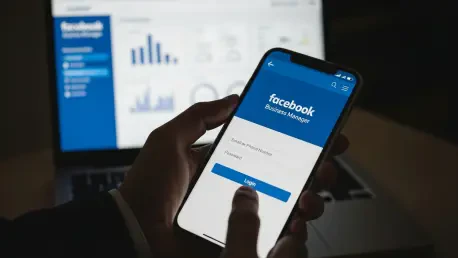
Business account owners are frequently targeted with urgent notices about account deletions, verification reviews, or copyright violations. Why are corporate social media assets more lucrative for attackers than personal ones, and what multi-step protocols should organizations implement to distinguish legitimate platform support from sophisticated social engineering?
Corporate social media assets are the “crown jewels” for these actors because they offer a direct pipeline to established advertising budgets and a massive, pre-built audience. A single compromised business account provides the attacker with “ad reputation,” allowing them to run fraudulent campaigns or spread malware using the company’s own credit line and trusted name, which is far more profitable than the data found in a standard personal profile. To defend against this, organizations need to move away from reactive clicking and implement a strict “verify-out-of-band” protocol where any urgent notification is checked directly within the platform’s official business manager dashboard rather than through email links. We also recommend a “two-person rule” for high-stakes account changes, ensuring that no single administrator can be pressured by a “Meta-related panic” lure into giving away credentials or 2FA codes without a second set of eyes reviewing the request.
Modern phishing kits often use gated CAPTCHAs and temporary hosting on Vercel or Netlify to harvest 2FA codes and government ID photos. What are the primary difficulties in blocking these ephemeral hosting environments, and how can security teams better protect users against data exfiltration methods like browser-based screenshots?
The difficulty with platforms like Vercel and Netlify lies in their “ephemeral” nature; attackers can spin up a professional-looking “Security Check” page in seconds and tear it down just as quickly, staying one step ahead of static blocklists. These pages often feel indistinguishable from the real thing, using fake CAPTCHAs to create a sense of legitimacy and “safety” that lures the victim into a false sense of security before demanding sensitive items like government-issued IDs. Protecting against advanced exfiltration techniques, such as the use of html2canvas for browser-based screenshots, requires a shift toward endpoint-level behavioral analysis that can detect unauthorized scripts attempting to capture the screen state. Security teams should also deploy browser isolation technologies or robust password managers that refuse to auto-fill credentials on these temporary domains, effectively breaking the chain of the attack before the 2FA code is even entered.
High-quality PDF documents generated through free design tools are being used to distribute malicious instructions and build rapport with victims. In what ways have accessible graphic design platforms lowered the barrier for entry for global threat actors, and how can employees be trained to spot fraudulent documents that carry no traditional malware?
Platforms like Canva have inadvertently democratized the creation of high-fidelity phishing lures, allowing actors with limited technical skills to produce documents that look identical to official Meta or Google correspondence. In the AccountDumpling campaign, we saw how these “clean” PDFs, devoid of traditional malware, easily sailed through email scanners because their threat lay in the social engineering content rather than a malicious payload. Training employees to spot these requires a move toward “metadata literacy,” where staff are taught to check the properties of a PDF for suspicious author names—like the Vietnamese name “PHẠM TÀI TÂN” found in this recent campaign—which often contradict the purported corporate identity. We must teach users that a “professional” aesthetic is no longer a proxy for “trustworthy,” and that any document requesting a login or a 2FA code should be treated with extreme skepticism regardless of how polished it looks.
Stolen credentials and business identities often flow directly into Telegram channels to be sold in underground storefronts or used for marketing fraud. What does the lifecycle of a compromised account look like in this criminal-commercial loop, and what are the hurdles in disrupting localized cybercrime hubs that operate internationally?
The lifecycle of a compromised account is a rapid transition from a private asset to a liquid commodity; once the credentials and 2FA codes are harvested, they are instantly forwarded to an attacker-controlled Telegram channel. From there, the data is bundled and listed on illicit storefronts where other criminals buy access to use the account for everything from “black hat” marketing to identity theft, creating a self-sustaining loop of monetization. The primary hurdle in disrupting these hubs, particularly those based in regions like Vietnam, is the jurisdictional friction that prevents international law enforcement from easily shutting down local servers or arresting the operators behind sites like “phamtaitan[.]vn.” Because these operations are structured as “living operations” with real-time panels and advanced evasion, they can quickly relocate their infrastructure to a different Telegram bot or hosting provider the moment one node is compromised, making it a constant game of digital whack-a-mole.
Fake recruitment schemes impersonating major tech brands are being used to trick professionals into joining calls or clicking malicious links. How has the shift toward remote hiring made these professional lures more effective, and what specific red flags should job seekers look for when communicating with recruiters on third-party platforms?
The normalization of remote hiring has been a boon for attackers because it has conditioned professionals to expect recruitment outreach from brands like Adobe, Apple, or Coca-Cola through third-party platforms and video calls. This environment of “digital first” interaction allows threat actors to build rapport and exploit the victim’s professional ambitions, making them much more likely to click a “meeting link” that is actually a credential harvester. Job seekers must remain vigilant for red flags such as recruiters who insist on moving the conversation to unsecured messaging apps too quickly or those who send “onboarding” documents via Google Drive that require a login to view. Any request to join a call that requires downloading a specific, non-standard “secure” browser extension or plugin should be an immediate dealbreaker, as these are often just specialized tools designed to steal session cookies and bypass 2FA.
What is your forecast for Facebook account security and the evolution of phishing relays?
I anticipate that the “phishing relay” model will become the standard blueprint for high-volume attacks, as threat actors increasingly move away from hosting their own infrastructure in favor of hiding within the “white noise” of trusted cloud services like AppSheet or Vercel. For Facebook and Meta Business users, the threat will likely shift toward more automated “session hijacking” where attackers don’t just want your password, but your active login token, allowing them to bypass 2FA entirely and take control of the account in real-time. We are entering an era where the “criminal-commercial loop” is so efficient that a stolen account can be sold and utilized for fraud within minutes of the initial phishing click, necessitating a move toward zero-trust architectures even for social media management. Expect to see more localized, “mega-operations” appearing out of Southeast Asia that utilize free design and automation tools to industrialize the theft of digital identities on a scale we haven’t seen before.