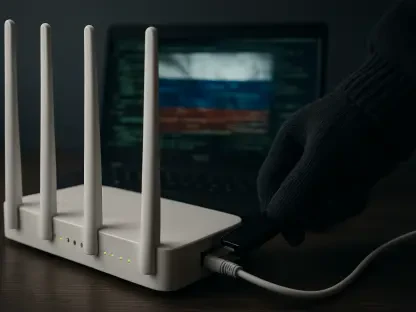

The smart speaker that answers your questions and the robotic vacuum that cleans your floors have become unassuming data collectors, quietly transforming the convenience of modern living into a significant and often overlooked security liability. This research summary analyzes the escalating crisis caused by the proliferation of Internet of Things (IoT) devices, exploring how these connected gadgets serve as unprotected gateways into our homes and corporate networks. The analysis reveals a disturbing trend where the rush to connect everything has left a trail of digital vulnerabilities that threat actors are becoming increasingly adept at exploiting.
The Hidden Threat in Your Home and Office
What were once considered benign tools of convenience have rapidly evolved into potent security threats. Devices like smart cameras, televisions, and even refrigerators are now integral parts of a vast, interconnected ecosystem. However, their integration into daily life has created an unguarded digital frontier. This article examines how these devices, often lacking fundamental security protections, provide a direct and often unmonitored entry point for malicious actors seeking to breach personal privacy or infiltrate secure enterprise environments. The threat is no longer theoretical; it is an active and present danger residing in millions of homes and offices.
The sheer volume of these devices magnifies the risk exponentially. Each new smart gadget added to a network contributes to a larger, more complex attack surface. For individuals, this means a growing number of potential vulnerabilities that could expose personal conversations, financial information, and private habits. For businesses, the threat is even more severe. An employee’s connected device, or even a seemingly harmless office appliance like a smart coffee maker, can become the weak link that unravels an entire corporate security infrastructure, rendering expensive defenses useless.
From Convenience to Compromise The IoT Security Gap
The explosion of the IoT market has dramatically outpaced the development and implementation of corresponding security standards. In the race to bring innovative products to market quickly and cheaply, many manufacturers have prioritized functionality and low production costs over robust security design. This has resulted in a global ecosystem saturated with devices that are inherently vulnerable from the moment they are powered on.
This market-driven oversight unfairly transfers the responsibility of security from the manufacturer to the end-user. Consumers and businesses are often unknowingly tasked with securing devices that were never designed to be secure in the first place. Without the technical knowledge or the necessary tools to mitigate these risks, users are left exposed. This critical gap between convenience and compromise has created a landscape ripe for exploitation, where the burden of protection falls on those least equipped to handle it.
Research Methodology Findings and Implications
Methodology
To understand the tangible risks, the research involved a detailed forensic analysis of a range of popular consumer IoT products. Devices such as Amazon Echo smart speakers, Apple TV streaming boxes, Google Home assistants, and Roomba robotic vacuums were systematically examined. This hands-on investigation focused on identifying inherent security flaws, documenting data handling practices, and assessing the ease with which a device could be compromised to extract sensitive user information or gain a foothold on a network.
Findings
A primary discovery is that many IoT devices are fundamentally insecure by design. They frequently ship with weak or non-existent default passwords and often lack basic security protocols that have been standard in traditional computing for years. This design philosophy creates a landscape where vulnerability is the default state, requiring users to take proactive—and often complex—steps to secure devices that should have been protected from the outset.
Furthermore, the research identified a widespread and critical failure to encrypt data stored directly on the devices, commonly known as “data at rest.” This means that if a device is lost, stolen, or sold, the personal data it contains—including account credentials, Wi-Fi passwords, and even audio recordings—can often be recovered with minimal effort. This oversight turns discarded gadgets into potential treasure troves for identity thieves and other malicious actors.
Compounding these technical flaws is the pervasive user habit of reusing passwords and accounts across multiple platforms. When the same credentials for a primary Google or Amazon account are used to set up a less-secure IoT device, a compromise of that single gadget can have a catastrophic domino effect. Attackers can leverage these stolen credentials to access more sensitive accounts, a tactic known as lateral movement, turning a simple device breach into a full-scale personal or corporate intrusion.
Implications
For individuals, these vulnerabilities pose a direct threat to personal safety and privacy. The insecure collection and storage of data on IoT devices can lead to identity theft, financial fraud, and profound invasions of privacy, such as the unauthorized monitoring of in-home cameras and microphones. The convenience these devices offer comes at the steep price of exposing the most intimate details of one’s life to potential exploitation.
Within an enterprise context, the implications are magnified exponentially. A single compromised IoT device on a corporate network can effectively bypass millions of dollars invested in sophisticated cybersecurity defenses. Threat actors can use an insecure smart device as an initial entry point to move laterally across the network, ultimately gaining access to critical servers, sensitive intellectual property, and confidential customer data. This makes every connected device, from a smart thermostat to a networked printer, a potential vector for a devastating corporate data breach.
Reflection and Future Directions
Reflection
The current state of IoT security reflects a “perfect storm” of contributing factors. This storm is fueled by the mass production of insecure products, widespread user complacency regarding basic digital hygiene like unique passwords, and a dangerously slow response from the industry to implement meaningful, universal security standards. The result is a deeply flawed ecosystem where risk has become the accepted norm.
A major challenge moving forward is the immense number of vulnerable legacy devices already deployed worldwide. These billions of existing gadgets will not be easily patched or replaced, meaning they will remain a persistent global threat for years to come. This long tail of insecurity ensures that even if all new products were built to the highest security standards, the foundational problem would persist, demanding long-term mitigation strategies rather than quick fixes.
Future Directions
Future efforts to address this crisis must advance on three critical fronts. First, there is an urgent need to increase user and enterprise awareness. Education about the tangible risks associated with IoT devices is the first step toward fostering a culture of security where individuals and organizations treat these gadgets with the same diligence as their computers and smartphones.
Second, the implementation of network segmentation is a crucial technical defense. By creating isolated networks exclusively for IoT devices, homes and businesses can contain a potential breach, preventing an attacker from moving from a compromised smart light bulb to a critical file server. Finally, encouraging the practice of account segregation—using dedicated, unique accounts for IoT devices—can limit the cascading damage of a credential compromise, ensuring that a single vulnerability does not unravel a user’s entire digital identity.
A Call for a New Security Paradigm
The research concluded that IoT devices should not be viewed as passive appliances but as active data collectors that continuously gather and store a wealth of sensitive information, often in an insecure manner. The convenience they offer has masked their true nature as network-connected computers that require diligent security management.
These findings underscored the urgent necessity for a fundamental shift in how both individuals and organizations perceive and manage IoT security. Waiting for a breach to occur is no longer a viable option. Instead, a proactive and defensive posture—built on awareness, segmentation, and sound digital hygiene—has become essential for navigating the complexities and dangers of our increasingly connected world.