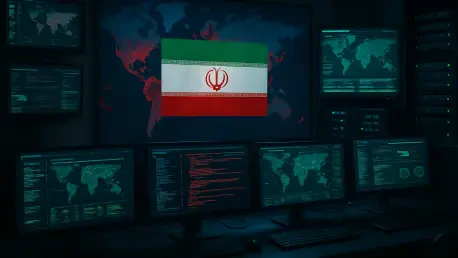

In an era where battles are fought not just on land or sea but in the shadowy realm of cyberspace, Iran has emerged as a formidable contender, wielding digital weapons with precision and intent that rival traditional military might. This invisible battlefield has become a critical frontier in global geopolitical tensions, where state actors like Iran deploy sophisticated cyber strategies to offset conventional disadvantages. The significance of these strategies cannot be overstated, as they pose substantial threats to digital security worldwide, affecting nations, industries, and critical infrastructure. This analysis delves into Iran’s cyber warfare objectives, the tactics shaping its digital arsenal, key targets in its crosshairs, expert perspectives on its approach, and the far-reaching implications for the future of global cybersecurity.
Understanding Iran’s Cyber Warfare Objectives
Strategic Motivations and Rising Activity
Iran’s ascent as a cyber power reflects a deliberate strategy to counterbalance its military and economic constraints on the world stage. Reports from industry leaders such as Google Cloud’s Mandiant, CrowdStrike, Rapid7, and ESET Research indicate a marked uptick in Iran’s cyber operations, with a focus on espionage-driven missions. Over the past few years, the frequency of these activities has surged, particularly in response to geopolitical pressures like sanctions and regional conflicts. The dual-purpose nature of these operations—serving both military advancements and political influence—underscores a calculated approach to achieving national goals without direct confrontation.
Moreover, the emphasis on espionage reveals a preference for long-term strategic gains over immediate disruption. Incident reports from the current year highlight how Iranian cyber actors prioritize gathering intelligence to bolster military capabilities while simultaneously exerting political leverage. This trend signals a sophisticated understanding of cyberspace as a domain for asymmetric warfare, where information can be as powerful as any missile.
Real-World Impacts and Specific Campaigns
Delving into specific operations, groups like UNC1549, often dubbed “Imperial Kitten,” exemplify Iran’s espionage focus through meticulous data theft and sustained network access. These actors target high-value entities, particularly in nations like Israel and the United States, aligning their efforts with Iran’s broader geopolitical rivalries. For instance, attacks on Israeli infrastructure often spike following military escalations, showcasing a direct link between physical and digital battlegrounds.
Additionally, sectors such as aerospace and defense remain prime targets, as stealing proprietary technology aids Iran in bypassing international sanctions that limit access to advanced systems. Beyond these primary adversaries, operations have extended to other regions, reflecting a strategic intent to diversify intelligence sources. These case studies illustrate how cyber warfare serves as an extension of national priorities, enabling Iran to project power discreetly yet effectively.
Tactics and Techniques in Iran’s Cyber Arsenal
Core Approaches and Stealth Operations
At the heart of Iran’s cyber toolkit lie methods like spear phishing and social engineering, often described by experts like Adam Meyers of CrowdStrike as “classic Iranian tradecraft.” These techniques allow threat actors to infiltrate networks with minimal noise, establishing footholds for prolonged access rather than immediate destruction. Unlike the more blatant cyberattacks attributed to nations like Russia, which frequently target critical infrastructure for visible impact, Iran’s approach leans toward subtlety and persistence.
This contrast highlights a distinct operational style, where the goal is to remain undetected while siphoning valuable data. Recent incidents demonstrate how Iranian actors exploit human vulnerabilities through tailored phishing campaigns, often masquerading as trusted entities to gain trust. Such tactics ensure a low profile, reducing the risk of retaliation that might accompany more overt digital assaults.
Versatile Threats and Strategic Evolution
Beyond espionage, Iran’s cyber activities span a wide array of threats, including ransomware, malware deployment, election interference, and hacktivism. This versatility showcases an ability to adapt to varying geopolitical landscapes, tailoring attacks to maximize impact based on the target and context. For example, interference in electoral processes aims to sow discord, while ransomware serves both financial and disruptive purposes.
Furthermore, the expansion of targets to include nations like Spain, Saudi Arabia, and the UAE reflects a broadening scope driven by shifting regional dynamics. Evidence from current analyses suggests that Iranian actors continuously refine their strategies, incorporating lessons from past operations to evade evolving defenses. This adaptability positions Iran as a dynamic adversary, capable of striking across multiple fronts with tailored precision.
Expert Insights on Iran’s Cyber Strategy
Drawing from industry thought leaders, perspectives on Iran’s cyber approach reveal a consensus on its strategic depth. Jeremy Makowski of Rapid7 emphasizes the focus on long-term data theft, noting how dual-use targeting serves both immediate intelligence needs and future military potential. This strategy ensures that every operation yields benefits across multiple domains, amplifying its overall impact.
In a similar vein, ESET Research points to Iran’s prioritization of visibility into adversaries’ plans, a focus that has intensified following recent military setbacks. Such insights underscore the role of cyber operations as a countermeasure to physical vulnerabilities, providing a window into enemy intentions without risking direct conflict. This approach aligns with broader national security goals, where information equates to power.
Adding to this, Adam Meyers of CrowdStrike highlights how rising geopolitical tensions fuel Iran’s cyber persistence. The interplay of regional rivalries and international pressures creates a fertile ground for sustained digital campaigns, positioning cyberspace as a primary arena for asserting influence. Collectively, these expert views paint a picture of a nation leveraging cyber tools as a critical pillar of its strategic framework.
Future Implications of Iran’s Cyber Warfare
Looking ahead, the trajectory of Iran’s cyber strategies appears poised for further sophistication, driven by technological advancements and escalating global tensions. The potential integration of emerging tools, such as artificial intelligence, could enhance the precision and scale of attacks, posing new challenges for defenders. This evolution may amplify Iran’s ability to target critical infrastructure, from energy grids to financial systems, with cascading effects on global stability.
On the upside, these capabilities could yield significant technological gains for Iran, particularly in sectors like aerospace and defense, where stolen intellectual property accelerates domestic innovation. However, this progress comes with heightened international scrutiny and the risk of retaliatory cyberattacks from adversaries. The delicate balance between gain and consequence will likely shape Iran’s approach in the coming years, as it navigates a complex web of alliances and enmities.
More broadly, the implications for global cybersecurity are profound. Iran’s tactics may inspire other nation-state actors to adopt similar strategies, leading to a proliferation of stealthy, espionage-focused threats. This trend underscores the urgent need for robust international frameworks to safeguard digital ecosystems, as the ripple effects of such warfare extend far beyond individual targets, threatening the very foundations of modern society.
Conclusion and Call to Action
Reflecting on the journey through Iran’s cyber warfare landscape, it became evident that its objectives centered on espionage and data theft, with key sectors like aerospace bearing the brunt of targeted campaigns. The geopolitical drivers behind these strategies painted a vivid picture of a nation using digital means to offset physical and economic limitations. Iran’s focus on Israel and other global players highlighted the intricate dance of power and influence in cyberspace.
Moving forward, the urgency to bolster defenses against such nation-state threats took center stage. Policymakers, businesses, and cybersecurity professionals were encouraged to collaborate on innovative solutions, from advanced threat detection to international cyber treaties, to mitigate the risks posed by actors like Iran. The path ahead demanded a proactive stance, ensuring that the digital realm remained a space of opportunity rather than a battleground for unseen wars.