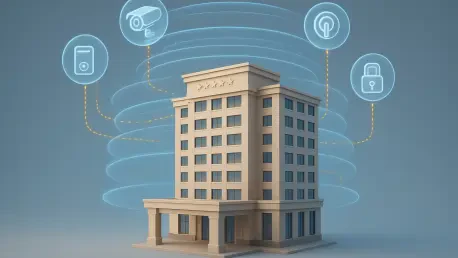

Digital innovation in hospitality is a double-edged sword that streamlines operational workflows while simultaneously introducing remote entry points for malicious actors. As guests enter a modern luxury suite, the expectation for a frictionless environment has shifted from mere physical comfort to complete digital integration. The ability to control ambient temperature, lighting, and entertainment systems through a centralized personal device or voice command is no longer a novelty but a baseline requirement for high-end hospitality brands. Yet, the very technologies that facilitate this seamless convenience—smart locks, connected thermostats, and biometric scanners—are frequently the most vulnerable points in a hotel’s infrastructure. The tension between providing an invisible, high-tech service and maintaining a robust, impenetrable security perimeter has become the defining challenge for property owners in the current landscape. When a guest uses a mobile key to access their room, they are participating in a complex dance of data exchange that involves local Bluetooth connections, cloud-based authentication servers, and the hotel’s central management software. This interconnectedness creates a massive surface area for cybercriminals to exploit, transforming a luxury stay into a potential gateway for large-scale data breaches or operational sabotage. To maintain trust, hotels must recognize that digital safety is now as fundamental to guest satisfaction as physical security or room cleanliness.
The Digital Ecosystem: Navigating Interconnected Vulnerabilities
A contemporary smart room is a complex network of hardware, including smart locks, occupancy sensors, and voice-activated assistants that often operate in a fragmented environment. These devices frequently come from various manufacturers and run on different proprietary software, making it nearly impossible to maintain a consistent security posture across a single property, let alone an entire international chain. Many of these enterprise-connected devices suffer from outdated firmware or insecure default configurations, providing easy entry points for remote attackers who seek to exploit the Internet of Things (IoT). Managing visibility over thousands of individual units, such as connected minibars or smart curtains, is an immense logistical challenge that hotels must address to prevent unauthorized network access. The lack of standardized security protocols across the IoT industry means that a high-end television in a guest room might have significantly weaker encryption than the tablet used for check-in. This disparity creates a “weakest link” scenario where the most innocuous device can become a bridge for a sophisticated cyberattack. Without a unified strategy to monitor and update these disparate systems, the very technology designed to enhance the guest experience becomes a silent liability waiting to be triggered.
The central hub of any modern hotel is the Property Management System (PMS), which serves as the brain of the operation by integrating with Wi-Fi networks, point-of-sale terminals, and external partner services. This deep interconnectedness means that a vulnerability in a seemingly minor device, such as a smart thermostat or a digital signage board, can serve as a gateway to the most sensitive guest data stored within the core server. Cybersecurity experts warn that the primary danger in this environment is lateral movement, a technique where an attacker breaches a low-security IoT device and then moves horizontally through the network to access financial information or personal identities. In many documented instances, hackers have managed to infiltrate secure databases by first compromising a smart appliance that lacked basic firewall protections. Once inside the network, an actor can dwell for weeks or months, harvesting credit card details and loyalty program data without triggering traditional alarms. The sophistication of these attacks has forced hotel operators to move beyond perimeter-based defense and adopt a more granular view of internal traffic. Protecting the PMS requires not just firewalls, but an active understanding of how every single connected device communicates with the central infrastructure.
Operational Hurdles: Overcoming Organizational and Third-Party Risks
One of the most significant hurdles in securing smart hotels is the pervasive lack of unified ownership over technology within the corporate structure. In many organizations, responsibility is fragmented across different departments: security teams manage physical locks, facilities engineering handles HVAC systems, and the IT department manages the underlying network and servers. This siloed approach often leads to the creation of orphaned devices that fall through the cracks of traditional maintenance schedules and security audits. Because no single entity has a complete inventory of every connected sensor and controller, legacy hardware often remains functional for years without receiving critical security patches. These unmonitored devices create permanent vulnerabilities in the hotel’s digital infrastructure, as they are essentially invisible to the security team until a breach occurs. To solve this, hotels must establish a cross-functional technology committee that bridges the gap between physical operations and digital security. Effective governance ensures that every device, from the smart showerhead to the elevator controller, is accounted for and regularly updated to meet the latest security standards.
Furthermore, the heavy reliance on third-party vendors for system maintenance and cloud services introduces additional layers of risk that are often difficult to quantify. Technology suppliers frequently require remote access to manage smart systems and perform troubleshooting, but if this access is too broad or lacks multi-factor authentication, it creates a potential backdoor for cybercriminals. If a vendor’s own network is compromised, the attackers can use those legitimate credentials to enter the hotel’s ecosystem undetected. Beyond the immediate threat of a breach, data privacy has become a growing concern as smart rooms collect granular information on guest preferences and physical presence. Hotel operators must be increasingly transparent about how this data is stored, encrypted, and shared with third-party analytics firms. Privacy and security are now inextricably linked, as the loss of guest behavioral data can be just as damaging to a brand’s reputation as the theft of financial information. Contracts with vendors must now include strict cybersecurity clauses and right-to-audit provisions to ensure that every partner in the supply chain adheres to the same rigorous standards as the hotel itself.
Proactive Defense: Implementing Rigorous Security Strategies
The first line of defense against modern cyber threats begins during the procurement process, rather than after a system has already been installed. Hotels must look beyond initial costs and user-facing functionality, making long-term digital security a primary requirement for any new hardware or software acquisition. This involves conducting rigorous pre-purchase assessments of how a device authenticates users, how the manufacturer handles the disclosure of vulnerabilities, and what specific data types the device will process or store. By defining these expectations clearly in vendor contracts, hotels can ensure they are not burdened with unpatchable technology that becomes a long-term liability the moment it is plugged in. Procurement teams are now working closely with security architects to vet every piece of hardware for its “security-by-design” credentials. This proactive vetting process prevents the introduction of “black box” devices into the network that could communicate with unknown external servers. Setting high standards at the entry point of the technology lifecycle is the most cost-effective way to reduce the overall risk profile of a luxury property in a hyper-connected market.
From a technical perspective, network segmentation has become an essential strategy for containing potential breaches and limiting the damage of a successful intrusion. Using a “least privilege” approach, hotels should isolate guestroom IoT devices on their own dedicated virtual networks, completely separate from the segments that handle credit card transactions, employee payroll, or guest personal databases. This ensures that even if an attacker manages to compromise a smart light bulb or a voice assistant, they are physically and logically restricted from moving deeper into the hotel’s more sensitive financial systems. Continuous monitoring and an exhaustive, automated asset inventory are also vital for spotting unusual behavior, such as a television attempting to communicate with the building’s climate control system or an occupancy sensor sending large packets of data to an external IP address. Modern security platforms now use artificial intelligence to establish a baseline of “normal” behavior for every device, alerting staff the moment a deviation occurs. This level of technical oversight allows hotels to enjoy the benefits of smart technology without leaving the door open to the catastrophic risks of a flat, unsegmented network.
Future Resilience: Managing the Technology Lifecycle and Brand Health
A critical but often overlooked phase of cybersecurity is the retirement and disposal of technology that has reached its effective end-of-life. While a smart thermostat or an electronic lock might remain physically operational for over a decade, its software support and security patching often expire much sooner, leaving it defenseless against new threats. Hotel operators must have a predefined plan for when a device reaches its end-of-support date, whether that involves replacing the hardware entirely, isolating it from the public internet, or disabling its connectivity features. Proactive lifecycle planning prevents hotels from being forced into expensive, unplanned emergency refreshes or, worse, maintaining dangerous security gaps out of financial necessity. Between 2026 and 2028, the industry is expected to see a significant wave of hardware updates as first-generation smart devices become obsolete and require replacement with more secure, modern alternatives. Managing this transition requires a clear roadmap that treats technology as a depreciating asset with a fixed lifespan, rather than a one-time capital expense. Success in this area is measured by the ability to sunset old systems before they become a liability to the organization’s digital health.
Ultimately, the definition of a smart hotel evolved to include digital resilience as a core feature of the luxury experience. The industry recognized that guest safety and brand reputation were entirely dependent on the robustness of the systems supporting the high-tech stay. It was determined that security was no longer just a technical requirement buried in the IT budget, but a foundational element of modern hospitality management. By integrating security into the procurement process, maintaining strict network controls, and planning for the long-term health of their technology, hotel operators established a way to offer a high-tech stay without compromising guest safety. The transition toward this holistic security model proved that luxury and safety were not mutually exclusive, but rather two sides of the same coin. Moving forward, hospitality leaders should conduct biannual security audits of all guest-facing IoT devices and implement mandatory multi-factor authentication for all third-party vendor access points. Investing in staff training to recognize social engineering attempts and physical tampering with smart devices will further harden the property against evolving threats. These actionable steps will ensure that the convenience of the smart hotel remains an asset rather than a vulnerability.