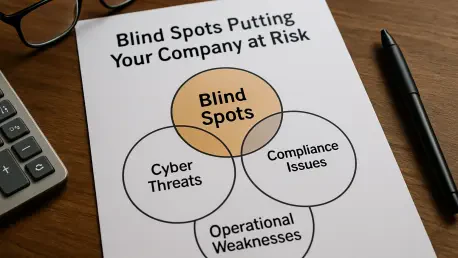

A security operations center attempting to defend a modern enterprise with only historical data is akin to a driver trying to navigate a high-speed collision course by looking exclusively in the rearview mirror. This backward-facing posture, common in many organizations, creates dangerous blind spots that threat actors are becoming increasingly adept at exploiting, leaving businesses vulnerable to attacks they never see coming. The fundamental challenge for security leaders is shifting from this reactive model to a proactive stance, one that provides the foresight needed to anticipate and neutralize threats before they can inflict significant damage. This transition is no longer a strategic advantage but a core requirement for survival in an increasingly hostile digital environment.
If Your Security Team Can Only See Attacks in the Rear-View Mirror How Can You Avoid a Collision
The conventional Security Operations Center (SOC) operates on a well-established but fundamentally flawed principle: react and respond. This workflow begins only after a security tool generates an alert, triggering a sequence of investigation, triage, and eventual remediation. While structured, this approach forces security teams into a perpetually defensive crouch, always waiting for the next blow to land. They are tasked with analyzing events that have already transpired, effectively cleaning up after an intrusion has begun rather than preventing it from happening in the first place.
This reactive state is defined by what it cannot see. It offers no visibility into an adversary’s preparation and staging activities, such as registering domains or deploying infrastructure. It lacks the capacity to anticipate campaigns specifically targeting an organization’s industry or region, leaving defenders unprepared for tailored threats. Consequently, defensive adjustments are delayed, critical vulnerabilities remain exposed for longer, and the entire security apparatus becomes over-reliant on outdated indicators of compromise (IOCs) from past attacks, which offer little protection against novel or mutated threats.
The Perpetual Catch-Up Why the Traditional SOC Model Is Failing
Operating in a constant state of reaction traps a SOC in a cycle of perpetual catch-up. Analysts are inundated with a high volume of alerts, many of which are false positives or irrelevant to their organization’s specific risk profile. Each alert must be investigated from a cold start, consuming valuable time and cognitive resources as analysts piece together context that is often fragmented or incomplete. This operational model is not only inefficient but also unsustainable, as adversaries continue to accelerate their attack velocity.
The tangible costs of this reactive posture are substantial and multifaceted. Financially, resources are wasted on investigating low-priority threats while genuine dangers may be overlooked in the noise. Operationally, prolonged investigation timelines increase the dwell time of attackers within the network, elevating the potential for catastrophic damage. Perhaps most critically, the human cost is immense. The relentless pressure of this “firefighting” model leads directly to analyst burnout, high turnover rates, and a diminished security posture, ultimately increasing the likelihood of a successful and costly breach.
From Fog to Foresight Pinpointing and Eliminating Critical Blind Spots
To break this cycle, organizations must address the critical visibility gaps that enable adversaries to succeed. The most significant of these is the intelligence gap, which separates historical incident data from real-time attacker activity. Proactive threat intelligence bridges this divide by providing a forward-looking view of what adversaries are doing now—their current tools, tactics, infrastructure, and targets. This shifts the focus from analyzing past events to understanding and anticipating future ones.
However, raw intelligence is not enough to provide clarity; it must be filtered through the context gap. Generic threat data, devoid of specificity, often creates more noise than signal. Threats are not evenly distributed; a malware campaign targeting financial institutions in North America may be irrelevant to a manufacturing firm in Europe. Therefore, understanding an organization’s unique risk landscape—defined by its industry, geography, and technology stack—is essential for effective prioritization and response. Context turns a deluge of data into a focused stream of actionable insights.
Compounding these challenges is the complexity gap, driven by the rise of hybrid threats. Modern adversaries frequently chain together multiple distinct malware families in a single operation, such as using Tycoon 2FA for initial access and Salty for session hijacking. These blended attacks are designed to bypass traditional detection rules that look for signatures of a single threat. Defending against such sophisticated operations requires security tools capable of mapping complex attack chains and understanding the logic of multi-stage intrusions, moving beyond simple malware identification.
Intelligence in Action A Tale of Two Threats
The true power of modern threat intelligence lies in its ability to attribute threats to specific contexts, transforming a generic alert from a potential distraction into a clear directive. When security teams can connect a suspicious artifact to known campaigns targeting their sector or location, they can immediately assess its relevance and allocate resources accordingly. This capability is the cornerstone of an intelligence-driven defense.
Consider the analysis of a suspicious domain, benelui.click. A reactive SOC might spend hours investigating this artifact in isolation. However, an intelligence platform can instantly link it to active Lumma Stealer and ClickFix campaigns that predominantly target the telecommunications and hospitality sectors in the United States and Canada. For a healthcare organization in Asia, this alert can be safely de-prioritized, freeing analysts to focus on more immediate dangers. This simple act of contextualization saves time and prevents resource drain.
In another scenario, a CISO at a German manufacturing firm needs to understand the most pressing threats to their operations. Instead of sifting through thousands of global threat reports, the CISO can perform a contextual query for malware impacting their specific environment (industry:"Manufacturing" and submissionCountry:"DE"). This query immediately surfaces the most relevant threats, such as the Storm-1747 APT group known to target the German production sector, along with prevalent malware like Tycoon 2FA and EvilProxy. This targeted intelligence enables the CISO to proactively tune defenses, brief the security team, and hunt for specific indicators before an attack is launched.
A Framework for Achieving Clarity Steps to Operationalize Proactive Defense
Achieving a proactive defense posture requires a structured approach to operationalizing threat intelligence. The first step is to enrich every alert with deep, actionable context. This means moving beyond basic IOCs to integrate tools that provide detailed behavioral analysis, identify malware families and their variants, and map the underlying infrastructure of every potential threat. This enrichment transforms a simple alert into a comprehensive intelligence briefing.
Next, defenses must be tuned with a live stream of relevant indicators. Security controls become outdated the moment they are deployed if they are not continuously updated. By implementing threat intelligence feeds derived directly from real-world malware analysis, organizations can ensure their firewalls, endpoint detection systems, and other security tools adapt at the same speed as the threat landscape, blocking emerging threats automatically.
With enriched data and adaptive defenses in place, the third step is to prioritize relentlessly based on the business environment. Using industry and geographic context to filter out irrelevant alerts is crucial for accelerating triage and focusing finite security resources on the threats that pose a genuine and immediate danger. This disciplined approach ensures that the most critical risks receive the most urgent attention.
Finally, these steps empower the security team to transition from a reactive “response” mentality to a proactive “hunting” posture. Armed with rich, contextual intelligence about the adversaries targeting their organization, analysts can actively search for signs of intrusion and get ahead of attackers. This strategic shift transforms the SOC from a passive defense unit into an aggressive and forward-thinking security asset.
The journey from a reactive to a proactive security model was a necessary evolution driven by an increasingly sophisticated threat landscape. Organizations that successfully made this transition found that by eliminating their critical blind spots, they could move beyond the exhausting cycle of firefighting. They discovered that enriching alerts with industry- and geography-specific context did more than just reduce noise; it provided the clarity needed to anticipate adversary moves, prioritize defenses effectively, and empower their teams to hunt for threats before they could materialize. This shift in perspective fundamentally transformed their security posture from a state of constant vulnerability to one of strategic advantage.