
Understanding the Breach of EU Cloud Infrastructure
The digital sovereignty of the European Union faced a major challenge on March 19, when the hacking collective known as TeamPCP successfully compromised the European Commission’s infrastructure. This breach is particularly significant because it targeted the Amazon Web Services environment supporting the Europa.eu platform, a central hub utilized by member states to host websites for various bloc entities. The incident highlights a critical vulnerability in modern governance: the reliance on complex, automated supply chains that provide lucrative entry points for threat actors. By examining this event, the evolving nature of cyber threats where geopolitical targets and technical supply chain weaknesses intersect becomes clearer. This timeline serves to document the progression of the attack, the methods employed by the hackers, and the broader implications for international cybersecurity standards in an era of cloud-hosted public services.
Chronological Progression of the TeamPCP Intrusion
March 19: Initial Access via Compromised Tooling
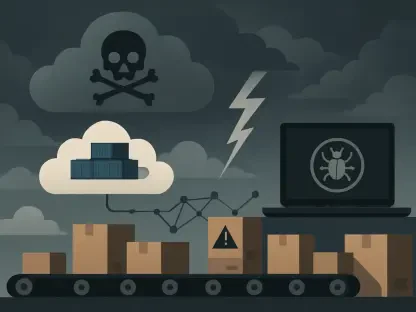
The breach began when TeamPCP exploited a supply chain vulnerability involving Trivy, a popular security scanning tool used by the European Commission. Through standard update channels, the Commission inadvertently installed a malicious version of the software. This “poisoned” update allowed the threat actors to extract a secret Amazon API key, granting them unauthorized entry into the Commission’s AWS account. This initial foothold was the catalyst for the entire operation, demonstrating how even security-focused software can be turned into a weapon when the supply chain is compromised.
March 19 to March 27: Data Exfiltration and Internal Assessment
Immediately following the acquisition of the API key, the hackers secured management rights within the cloud environment. During this period, TeamPCP exfiltrated approximately 92 gigabytes of compressed data. The investigation by CERT-EU revealed that the stolen dataset comprised roughly 52,000 files associated with outbound email communications. While the threat actors possessed the management rights necessary for lateral movement to other AWS accounts, investigators determined that the hackers remained focused on the Europa.eu infrastructure, impacting 42 internal clients and 29 different EU entities.
March 28: Dark Web Distribution and Criminal Collaboration
The lifecycle of the breach entered a new phase when the stolen materials surfaced on a dark web marketplace. The data was hosted by ShinyHunters, a notorious group specializing in the sale and distribution of large-scale data dumps. This transition from TeamPCP to ShinyHunters marked a pivotal shift in the incident, illustrating a collaborative criminal ecosystem. By offloading the stolen assets to a specialized distribution group, TeamPCP moved from the role of technical infiltrator to a wholesale supplier of illicit data, complicating the recovery and mitigation efforts for EU officials.
Significant Turning Points and Strategic Impacts
The most profound turning point in this incident was the successful poisoning of the Trivy software update, which bypassed traditional perimeter defenses by leveraging trusted vendor relationships. This underscores a persistent pattern in modern cyber warfare where the target is not the primary organization, but the third-party tools they rely upon. The impact was felt across nearly 30 different EU entities, exposing personal data through email bounce-back notifications and automated messages. The overarching theme identified by investigators is the shift toward specialized labor within the cybercriminal world. The collaboration between TeamPCP’s technical execution and ShinyHunters’ distribution capabilities represents a “crime-as-a-service” model that increases the efficiency and reach of data breaches. This event leaves a notable gap in current cloud security practices, specifically regarding the monitoring of API key usage and the verification of automated software updates.
Nuances of Cloud Security and Criminal Specialization
A closer look at this breach reveals the specific risks inherent in government cloud environments where centralized management can lead to widespread exposure. While many organizations focus on preventing external hacking, this case highlights the “silent” threat of API credential mismanagement. A common misconception is that cloud providers are solely responsible for security; however, the European Commission’s experience proves that the user’s choice of third-party integrations remains a primary risk factor. Expert analysis suggests that TeamPCP’s previous involvement in the LiteLLM cyberattack indicates a growing focus on targeting cloud-native tools and AI-adjacent infrastructure. Furthermore, the regional impact on the EU’s Europa.eu platform serves as a reminder that regional digital hubs are high-value targets for groups looking to maximize their leverage. As threat actors refined these supply chain methodologies, the necessity for zero-trust architectures and rigorous auditing of automated update pipelines became more than a recommendation—it became a requirement for institutional survival. Security teams then prioritized granular permission sets and tighter API monitoring to mitigate future risks.