
The digital keys to a modern enterprise are not stored in a vault but are scattered across thousands of employee accounts, each secured by a password that may offer little more than the illusion of protection. While security leaders invest heavily in defending against sophisticated cyber threats, a far more mundane and overlooked vulnerability persists within the fabric of everyday corporate life. Organizations diligently enforce password policies requiring complexity, length, and regular changes, yet this very framework often encourages a behavior that renders these rules ineffective: the creation of near-identical passwords. This subtle act of compliance circumvents security controls, creating a dangerous gap between perceived safety and actual risk that cybercriminals are all too eager to exploit.
How 48,000 Passwords Can Become One Predictable Pattern
The modern digital ecosystem has created a staggering credential management challenge for organizations. A company with just 250 employees may find itself responsible for securing nearly 48,000 passwords across countless applications, platforms, and services. Each of these credentials represents a potential entry point for an attacker, and as this number grows, so does the organization’s attack surface. This proliferation of passwords places an immense strain not only on IT departments but also on the employees who must create, remember, and manage them.
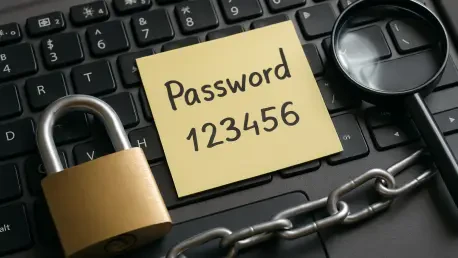
This environment gives rise to a widespread and risky workaround known as disguised password reuse. Instead of creating truly unique passwords, users make minor, predictable modifications to a familiar base password to satisfy policy requirements. For example, Summer2025! becomes Summer2026!, or MyP@ssword1 is updated to MyP@ssword2. While these new credentials technically meet the criteria for complexity and history, they offer no meaningful improvement in security. The underlying pattern remains intact, providing a clear and easy path for attackers who have compromised the original password.
The Illusion of Compliance Why Ticking the Policy Box Is Not Enough
For decades, the bedrock of password security has been a set of standard rules: minimum length, a mix of character types (uppercase, lowercase, numbers, symbols), and mandatory periodic rotation. These policies are designed to be a straightforward defense mechanism, and achieving compliance often gives security teams a sense of accomplishment. The problem, however, is that these rules were designed for an era when brute-force attacks involved random guessing. Today’s attackers are far more sophisticated.
The compliance checkbox has become a distraction from genuine security. A password like Company#2026! passes every conventional test, yet it is trivial for an attacker to guess if a previous version, such as Company#2025!, has been exposed in a data breach. The policy successfully forces a change but fails to enforce a meaningful increase in security. This creates a dangerous cycle where both the organization and its employees believe they are following best practices, while in reality, they are merely perpetuating a vulnerability in plain sight.
Deconstructing the Attacker’s Playbook How Predictable Patterns Become Open Doors
Threat actors do not waste time randomly guessing passwords; they operate with data-driven precision. Their playbook begins with enormous databases of credentials stolen from previous data breaches, which are readily available on the dark web. Armed with this information, they use automated tools to run through common password transformations, or “mutations,” at a massive scale. These tools are programmed to test for the exact patterns that users rely on when creating near-identical passwords.
These automated attacks systematically check for incremented numbers, swapped symbols (! for ?), appended characters, and changes in capitalization. This methodology turns predictable human behavior into a significant advantage for the attacker. What an employee sees as a clever and compliant password modification is, to an attacker’s algorithm, just another entry on a checklist. The result is that a single compromised password can be quickly mutated to unlock access to numerous other accounts, turning one small breach into a widespread corporate intrusion.
The Human Element When Security Rules Clash with Cognitive Load
The root cause of near-identical password reuse is not negligence but a natural human response to cognitive overload. Employees are expected to navigate a complex digital workspace, often requiring them to remember dozens of unique credentials for systems with varying and sometimes conflicting password requirements. In this context, the mental effort required to generate and memorize a completely novel, complex password for every mandated change becomes overwhelming.
This is where security policy directly clashes with user experience. Faced with this cognitive burden, employees will inevitably seek the path of least resistance. Modifying a familiar password is a logical, memory-friendly strategy that satisfies the immediate demand of the system prompt without adding to their mental load. It is a practical workaround born from a desire to be both compliant and efficient. Until security strategies account for this fundamental human factor, employees will continue to find ways to simplify their digital lives, often at the expense of security.
Beyond the Basics Shifting from Outdated Rules to Intelligent Defense
Addressing the threat of disguised password reuse requires a fundamental evolution in how organizations approach credential security. It is time to move beyond static, easily circumvented rules and adopt a more dynamic and intelligent framework. This modern approach focuses on understanding and blocking the actual methods attackers use, rather than simply enforcing superficial complexity. True security lies in making predictable patterns obsolete.
An effective strategy begins with continuously monitoring corporate credentials against databases of passwords exposed in public data breaches. This proactive measure prevents employees from using passwords that are already in the hands of attackers. This should be coupled with sophisticated similarity analysis that goes beyond basic history checks to actively block new passwords that are too similar to previous ones. By detecting and rejecting common mutations, this technology forces the creation of genuinely unique passwords. Finally, implementing these advanced controls through a centralized policy management system ensures that strong, consistent protection is applied uniformly across the entire IT environment, closing the dangerous gaps left open by outdated security practices.
The reliance on traditional password policies fostered a misplaced sense of security, allowing predictable user behaviors to become exploitable vulnerabilities. Attackers, leveraging vast databases of breached credentials and automated tools, capitalized on the human tendency to make minor, convenient modifications to existing passwords. Organizations that recognized this gap began to shift their strategies. By implementing continuous breach monitoring and intelligent similarity analysis, they moved beyond mere compliance and started to build a more resilient defense. This evolution acknowledged that effective security required not just rules, but an understanding of both the attacker’s methods and the user’s practical limitations, leading to a more robust and realistic approach to protecting digital identities.