
The quiet humming of a municipal water treatment plant usually signifies safety and operational stability, yet recent digital intrusions have transformed these vital facilities into primary targets for international cyber adversaries seeking to disrupt the American way of life. When sophisticated hackers breached multiple wastewater systems in late July, they did not just compromise sensitive data; they directly threatened the physical integrity of public resources and the very trust citizens place in their local utilities. This sudden escalation in hostility prompted an immediate high-priority mobilization from the Federal Bureau of Investigation, the Environmental Protection Agency, and the Cybersecurity and Infrastructure Security Agency. These organizations were forced to confront a harsh reality where the digital architecture governing essential services remained dangerously exposed to foreign actors. The geographical concentration of these incidents, particularly across the Midwest, highlighted a coordinated effort to probe for structural weaknesses in at least seven states. Minnesota saw dozens of municipal sites targeted within a remarkably short window, while Michigan reported nearly ten separate systems under siege by malicious actors. Although the water supply remained safe for immediate consumption, the operational disruptions were severe enough to force operators into manual mode to prevent localized flooding or dangerous pressure fluctuations.
Assessing Technical Weaknesses: The Infrastructure Gap
The current state of national water infrastructure is characterized by a precarious reliance on aging technology that was never designed to withstand the complexities of modern cyber warfare. As digital connectivity becomes more integrated into industrial control systems, the gap between operational efficiency and cybersecurity preparedness continues to widen, leaving many municipalities in a state of constant risk. Authorities have noted that the speed at which foreign adversaries can scan and exploit internet-facing hardware far outpaces the rate at which local utility boards can approve and implement security upgrades. This discrepancy creates a permanent window of opportunity for state-sponsored actors to conduct reconnaissance and establish persistence within critical networks. Furthermore, the specialized nature of water treatment requires a unique blend of civil engineering and information technology skills, a combination that is often lacking in smaller departments. Consequently, the transition toward a more secure digital environment is hampered by a lack of specialized training and a general underestimation of the threat landscape. The recent wave of attacks has served as a wake-up call, emphasizing that the physical safety of the water supply is now inextricably linked to the integrity of the code that manages it.
Identifying Systemic Vulnerabilities: The Legacy Software Crisis
A primary factor contributing to these breaches is the widespread use of aging technology and legacy software at the municipal level, where systems often operate on outdated foundations. Many facilities rely on industrial control software that no longer receives security patches, making them “soft targets” for foreign adversaries who specialize in exploiting known vulnerabilities. In many instances, the supervisory control and data acquisition systems utilize versions of operating environments that are over a decade old, lacking the fundamental protections found in modern computing. This technical debt creates a significant hurdle for security professionals who must balance the need for constant uptime with the necessity of complex and frequent updates. Hackers exploit these gaps by deploying well-known scripts that have long been mitigated in the private sector but remain active in public utilities due to the difficulty of upgrading industrial hardware. Furthermore, the proprietary nature of many control systems means that generic security tools are often incompatible with the existing architecture. Utility managers are frequently left with a difficult choice between maintaining operational continuity on insecure hardware or risking significant downtime during a migration process.
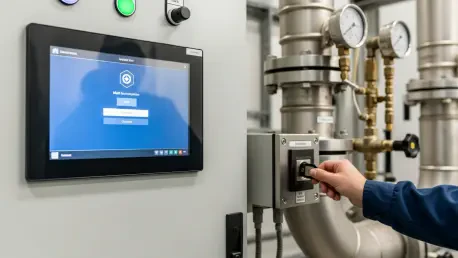
Compounding these technical issues is a persistent lack of basic security protocols, such as multi-factor authentication and the use of complex, unique passwords across administrative portals. Many facilities allow unauthorized users to gain remote access to vital control systems through gateways that still utilize factory-default credentials or easily guessable login combinations. In several of the recent July attacks, hackers bypassed multiple security layers simply by targeting exposed web interfaces that lacked secondary verification. The absence of multi-factor authentication is particularly concerning given that many operators must access these systems from off-site locations to monitor chemical levels or pump performance during non-business hours. Without robust verification, a single compromised set of credentials can grant an attacker full control over the physical mechanisms of a plant, including the ability to alter chemical dosages or shut down pumps. Security experts emphasize that implementing even basic credential rotation policies could have prevented the majority of recent intrusions. However, the cultural shift toward a “security first” mindset often lags behind the convenience of remote accessibility, creating a gap that foreign actors are eager to exploit for strategic gain.
Navigating Local Resource Gaps: The Decentralized Defense Problem
The decentralized nature of the American water system presents a unique challenge, as the burden of digital defense falls largely on local entities rather than a centralized national authority. With over fifty thousand individual water utilities operating across the country, the quality of protection is often tied directly to a specific municipality’s budget and the available technical expertise of its small staff. This fragmentation creates a security landscape where a small town with limited resources might be just as vulnerable as a major metropolitan area, yet lacks the personnel to monitor for emerging threats. Because each facility operates independently, there is no standardized wall of defense that can be deployed nationwide to protect every citizen simultaneously. Instead, every local board must decide how to allocate finite funds between physical infrastructure repairs, such as fixing leaking pipes, and digital security upgrades. This approach naturally leads to a scenario where attackers can search for the weakest link in a regional network, knowing that a breach in one small facility can provide valuable intelligence. The lack of a unified command structure makes it difficult to share threat intelligence in real-time, leaving local operators unaware of a coordinated campaign.
Funding for these critical upgrades remains a contentious issue, split between limited federal allocations and local tax revenues that are already stretched thin by other public priorities. While federal grants are technically available, the application process is often too complex and time-consuming for small utility departments to navigate without dedicated administrative support. This financial disconnect means that even when a vulnerability is identified by a local engineer, it may take months or even years to secure the capital needed for a technological overhaul. Moreover, the cost of hiring specialized cybersecurity personnel is often prohibitive for rural municipalities, forcing them to rely on general IT contractors who may not understand the specific nuances of industrial control systems. This creates an uphill battle against state-sponsored actors who possess nearly unlimited time and resources to probe for entry points into the nation’s infrastructure. Transitioning to a proactive defense model requires a fundamental change in how water infrastructure is funded, moving away from emergency-only spending toward a model of continuous investment. Until this financial gap is bridged, local utilities will remain at a disadvantage, struggling to maintain basic service while defending against world-class digital threats.
Geopolitical Tensions: The Domestic Political Fallout
Expert analysis suggests that the recent wave of cyberattacks is not a series of isolated criminal incidents but rather a calculated component of a broader geopolitical strategy. By targeting “lifeline services” such as water and electricity, foreign actors are sending a strategic warning to Washington, demonstrating their capacity to disrupt American infrastructure in retaliation for various international disputes. These intrusions highlight a growing trend of “modern warfare” where digital sabotage is used to signal strength and intent without crossing the threshold into traditional armed conflict. The attribution of these attacks to groups affiliated with the Islamic Revolutionary Guard Corps indicates that the digital battlefield is now a primary theater for expressing geopolitical grievances. On the domestic front, the crisis has fueled a debate regarding the effectiveness of federal oversight and the adequacy of current staffing levels at national security agencies. State leaders have increasingly expressed frustration over the perceived lack of timely intelligence and support provided to municipal utilities during active threats. This tension underscores the need for a more integrated approach that combines national intelligence with local operational knowledge to form a more cohesive defense.
Attributing Foreign Actors: Digital Sabotage as Strategic Warning
Analysis of the tactics and procedures used in the July breaches points toward Iranian-affiliated groups, specifically those linked to the Islamic Revolutionary Guard Corps and its digital proxies. These actors have demonstrated a preference for targeting specific technologies, such as Israeli-made programmable logic controllers, to achieve both political and technical objectives. This type of activity is not merely about data theft or surveillance; it is about establishing a presence within critical systems to maintain a “dormant” threat that can be activated at a moment’s notice. By successfully manipulating control software, these groups prove that they can cause physical consequences in the real world, such as altering water pressure or disabling filtration systems. This capability serves as a powerful tool for geopolitical leverage, potentially forcing domestic policy changes by creating a sense of insecurity among the civilian population. Experts warn that these “living off the land” techniques, which use a system’s own tools against it, are particularly difficult to detect and remediate. The strategic intent is to demonstrate that no part of American infrastructure is beyond the reach of foreign influence, regardless of its geographic location or size.
The domestic response to these attributions has become a point of contention between state leaders and federal policymakers regarding the adequacy of current defensive measures. Critics have pointed to significant staffing reductions and budget reallocations at the Cybersecurity and Infrastructure Security Agency as a major reason why local governments were left exposed. These workforce cuts have reportedly hampered the agency’s ability to provide the specialized coordination that small-town utility operators need to stay ahead of rapidly evolving foreign threats. Without a robust federal presence to act as a bridge, many local facilities were unaware of the specific tactics being used by Iranian-affiliated groups until the breaches were already in progress. This has led to renewed calls for a more centralized approach to infrastructure security, where the federal government takes a more active role in monitoring municipal networks for signs of compromise. However, such a move faces opposition from those who favor local autonomy and fear federal overreach into municipal management. The ongoing debate over the balance of power and responsibility continues to shape the legislative response to cyber threats, leaving many utilities in a state of transition.
Implementing Future Resilience: National Security Frameworks
The transition toward a more resilient water infrastructure necessitated a fundamental shift in how local municipalities perceived digital threats and federal assistance. By prioritizing the isolation of critical control networks from the public internet, engineers effectively neutralized the primary vector used by foreign adversaries in recent months. Legislative bodies established new standards for multi-factor authentication and mandatory reporting, which bridged the information gap between small-town utilities and national intelligence agencies. Funding mechanisms were overhauled to ensure that security upgrades were not solely dependent on local tax bases, allowing even the smallest facilities to implement robust defenses. These proactive measures ultimately transformed the water sector from a vulnerable “soft target” into a hardened component of national security. The focus moved from reactive emergency patching to a continuous cycle of auditing and improvement, ensuring that the nation’s most essential resource was protected by a unified defensive framework. Authorities concluded that the integration of advanced monitoring tools and personnel training served as the most effective deterrent against future foreign interference. The era of treating water security as an afterthought officially ended, replaced by a culture of technical parity.
Strategic investment in local talent also proved to be a cornerstone of the successful defense strategy implemented by state and federal partners. By establishing regional cybersecurity hubs, the government provided small utilities with access to high-level expertise that was previously unaffordable at the municipal level. These hubs facilitated regular incident response drills and vulnerability assessments, ensuring that operators were prepared to recognize and respond to the earliest signs of an intrusion. Furthermore, the adoption of “secure-by-design” principles for new infrastructure projects ensured that any hardware added to the network featured built-in protections against remote manipulation. The collaborative effort between the Environmental Protection Agency and private technology firms led to the development of standardized security profiles for common water treatment hardware. This standardization simplified the process of securing diverse systems, making it easier for non-technical staff to maintain a high level of protection. As a result, the nation’s water supply became significantly more resilient, capable of withstanding the persistent probing of foreign adversaries while maintaining uninterrupted service to the public. These actions demonstrated that a unified approach to cybersecurity could protect vital resources from even the most sophisticated international threats.