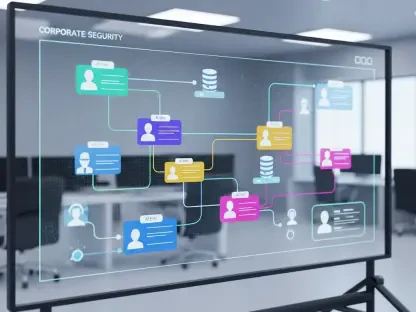

The digital landscape has shifted from a world where humans initiated every transaction to an environment where millions of autonomous agents negotiate access in the shadows of data centers every second. This transformation signifies the birth of a machine-centric economy, where the traditional boundaries of cybersecurity are no longer defined by the employees at their desks but by the workloads humming within cloud infrastructures. The central theme of recent investigations focuses on the escalating challenge of verifying these non-human identities as they navigate increasingly complex, multi-cloud environments. At the heart of this research lies a critical question: how can an enterprise reliably authenticate a service that lacks a human face, a physical location, or a predictable behavior pattern?
As artificial intelligence agents move beyond simple automation to exhibit reasoning and independent decision-making, the definition of a workload has expanded significantly. It now encompasses everything from basic microservices to massive clusters training large language models. The research identifies a widening gap between the speed of AI deployment and the evolution of security protocols. While human-centric security has matured through multi-factor authentication and biometric checks, the systems governing machine-to-machine interactions remain dangerously rudimentary, often relying on outdated methods that do not scale with modern demands.
The Workload Identity Crisis: Context and Significance
The current situation is best described as a systemic identity crisis within the digital infrastructure. In the past, security was largely a matter of defending the perimeter, but the migration to a heterogeneous cloud model has rendered the old walls obsolete. Most organizations now operate across a fragmented landscape involving multiple providers such as Amazon Web Services, Microsoft Azure, and Google Cloud Platform. This fragmentation creates a massive visibility gap, making it nearly impossible to maintain a consistent identity policy across different platforms.
The significance of this research lies in the shifting nature of economic value. Experts predict that the majority of high-value digital transactions will soon occur between autonomous systems with zero human intervention. If the identities of these systems are compromised, the potential for widespread disruption is enormous. Without a robust way to answer what a machine is and what it is permitted to do, the entire foundation of the digital economy remains vulnerable to exploitation. This study serves as a necessary wake-up call for an industry that has prioritized rapid innovation over the foundational security of its most active participants.
Research Methodology, Findings, and Implications
Methodology
The study employed a comprehensive analysis of enterprise security architectures across several industry verticals, focusing on how different organizations manage non-human identities. Researchers gathered data through technical audits of cloud configurations and qualitative interviews with cybersecurity leads at major global firms. The investigative team focused particularly on the interaction between legacy on-premises systems and modern containerized environments like Kubernetes. By simulating various “swarming” AI agent scenarios, the methodology tested the resilience of current authentication frameworks against dynamic, high-volume requests that mimic legitimate traffic but originate from potentially compromised sources.
Findings
The most striking discovery was the pervasive reliance on static credentials, such as hard-coded API keys and permanent IP addresses, which act as “forever keys” for attackers. Many organizations still utilize simple HTTP basic authentication for critical back-end services, creating a massive surface area for credential harvesting. Furthermore, the research found that AI agents often operate with excessive permissions, a direct violation of the principle of least privilege. In multi-cloud setups, the lack of a unified identity standard meant that a workload authenticated in one cloud was often treated as a “blind spot” when attempting to communicate with a resource in another, leading to insecure workarounds like broad IP whitelisting.
Implications
The results imply that a radical shift toward a Zero Trust framework for workloads is the only viable path forward. This requires moving away from static secrets toward dynamic, short-lived tokens that expire within minutes or even seconds. The practical application of technologies like Mutual TLS (mTLS) and the adoption of open standards like SPIFFE are no longer just best practices but essential requirements for survival. Theoretically, this research suggests that identity must become the new perimeter; when the physical and network boundaries disappear, the only thing left to defend is the cryptographically verified proof of what a specific piece of software is and why it needs access.
Reflection and Future Directions
Reflection
Evaluating the study’s process revealed that the primary obstacle to securing workload identities is not a lack of technology but a lack of coordination. While individual cloud providers offer robust identity tools, they are often designed to lock users into a specific ecosystem rather than facilitate secure cross-platform communication. The research could have benefited from a deeper dive into the specific legal and regulatory frameworks governing autonomous machine actions, as the lines of liability remain blurred. However, the study successfully highlighted that the technical debt accumulated through decades of “security by obscurity” is finally coming due in the age of autonomous agents.
Future Directions
Future research must explore the potential for decentralized identity models where workloads can carry their credentials across different administrative domains without relying on a single central authority. There is a pressing need to investigate how “remote attestation” can be scaled to support millions of transient microservices that only exist for a few seconds. Additionally, researchers should examine the role of specialized hardware, such as Trusted Execution Environments, in providing a physical “root of trust” for AI models. Standardizing the way different cloud platforms “federate” identity remains an unanswered challenge that will require significant industry-wide collaboration.
Securing the Autonomous Future: Final Perspective
The investigation into workload security demonstrated that the era of human-centric defense has reached its limit. The findings confirmed that the proliferation of non-human identities, fueled by rapid AI adoption, outpaced the traditional methods used to secure them. It was clear that the reliance on static credentials and fragmented cloud policies created vulnerabilities that could no longer be ignored by responsible organizations. The strategic shift toward dynamic authentication and short-lived identities became a foundational necessity rather than a secondary concern for enterprise resilience.
Defenders moved toward adopting global standards like SPIFFE and WIMSE to bridge the gaps between disparate cloud ecosystems. The push for automated secrets management and rigorous inventorying of AI agents provided a roadmap for stabilizing the machine-centric economy. Ultimately, the ability to verify the integrity of every autonomous process established the difference between a secure infrastructure and one prone to invisible exploitation. This study contributed a vital perspective on the need for a unified, machine-first security strategy that prioritized cryptographic certainty over the illusion of a network perimeter.