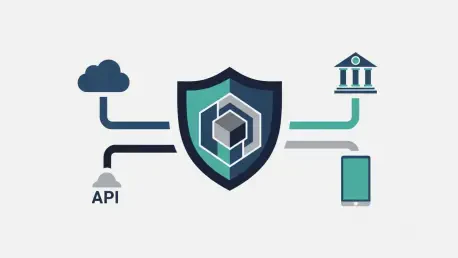

The global financial ecosystem currently operates on a razor-thin margin where the difference between a routine digital transaction and a systemic economic collapse often rests on a single line of encrypted code or a lone employee’s split-second decision. In the current landscape, the traditional boundaries of bank security have effectively dissolved, replaced by a reality where digital assets and customer trust are under constant, automated siege by sophisticated actors. Financial institutions, ranging from local credit unions to massive international investment houses, find themselves at the absolute center of a complex geopolitical and criminal crossfire that shows no signs of abating. The sheer volume of liquid capital moving through digital channels makes these entities the ultimate prize for state-sponsored attackers and decentralized syndicates alike. This immense pressure has successfully transformed cybersecurity from a siloed information technology function into the primary metric of institutional health and market viability.
The financial consequences of security failures have become more severe than ever, with average breach costs now consistently exceeding five million dollars per incident across the sector. Beyond the immediate loss of liquid funds, institutions now face long-term damage from rapid reputational erosion and aggressive penalty structures imposed by modernized legal frameworks. In a digital-first economy, the ability to protect customer data is no longer merely a legal requirement or a box to be checked for auditors; it has become the primary factor that determines a firm’s market competitiveness and its ability to attract high-value clients. Furthermore, the extreme interconnectivity of the modern financial system means that a single successful breach can have massive spillover effects across the entire national economy. Research indicates that a concentrated attack on a major central bank or a primary payment gateway could potentially disrupt over a third of a country’s total financial network, affecting everything from international clearinghouses to everyday retail transactions at the grocery store.
The Evolution of Sophisticated Cyber Threats
Social Engineering: High-Stakes Extortion
Artificial intelligence has completely revolutionized the field of social engineering by allowing attackers to create flawless phishing lures that are virtually indistinguishable from legitimate corporate communications or internal executive memos. These advanced tactics frequently target specific employees who possess the authority to move large sums of money or access proprietary databases, using business email compromise to trick them into authorizing fraudulent transfers. The precision of these campaigns has rendered traditional security awareness training largely ineffective, as even the most cautious and well-trained employees can fall victim to these highly personalized and contextually accurate scams. Gone are the days of poorly spelled emails; today’s attackers use deep-learning models to mimic the specific writing style and tone of a Chief Financial Officer, making the deception nearly impossible to detect through standard human observation or basic automated filters.
Ransomware remains a top-tier threat to the stability of the financial sector, but the underlying strategy has shifted toward a model of double extortion to maximize the psychological and financial pressure on victims. Instead of simply locking local systems and demanding a fee for the decryption key, attackers now prioritize the silent theft of sensitive customer data before making their presence known. This puts financial firms in an almost impossible position, as even if they possess the technical capability to restore their systems from secure backups, the threat of a public data leak can lead to catastrophic regulatory fines and a permanent loss of consumer confidence. The extortionists often set up dedicated leak sites on the dark web, releasing data in increments to prove their possession of the files and to keep the incident in the news cycle, thereby forcing the hand of board members who are desperate to contain the reputational fallout.
Technical Exploitation: Identity Fraud
As banks continue to expand their digital footprints into cloud-native environments, the global supply chain has emerged as a significant source of systemic vulnerability. Attackers frequently bypass the hardened perimeters of major institutions to target smaller third-party vendors with weaker security controls, using them as a bridge to gain a foothold in the primary target’s network. These weakest link attacks have proven that a single compromised service provider, such as a specialized cloud storage firm or a niche software developer, can lead to sensitive data exposure across dozens of organizations simultaneously. This reality has made comprehensive vendor oversight and continuous monitoring of the secondary supply chain a top priority for security teams who recognize that their defense is only as strong as the least secure partner in their ecosystem.
The rise of generative artificial intelligence has also introduced the unprecedented challenge of deepfakes and synthetic identities, which are increasingly used to bypass biometric security and open fraudulent accounts. Synthetic identity fraud, which blends real Social Security numbers with fabricated names and addresses to create entirely new personas, allows criminals to conduct long-term money laundering and credit fraud without being detected by traditional screening tools. These AI-powered threats require banks to move beyond static identity verification and adopt more advanced behavioral analysis to verify the true identity of their customers based on how they interact with digital platforms. Simultaneously, the push toward open banking has led to the widespread use of Application Programming Interfaces, which serve as critical entry points for modern cyberattacks. Common vulnerabilities like broken access controls or insecure endpoints allow hackers to scrape vast amounts of data or manipulate transactions directly through mobile app backends, necessitating a more rigorous approach to securing these digital gateways.
Navigating the Global Regulatory Landscape
Mandating Resilience: Transparency Requirements
The Digital Operational Resilience Act in the European Union has established a new global standard by shifting the primary focus of regulators from basic data protection to total operational resilience. This comprehensive regulation requires financial firms to prove through documented evidence that they can withstand, respond to, and recover from various types of technology-related disruptions through rigorous testing and independent oversight. Failing to comply with these strict mandates can result in significant financial penalties that are calculated as a percentage of a firm’s total annual global turnover, making compliance a board-level priority. This shift reflects a growing understanding among policymakers that the stability of the financial system depends not just on the solvency of banks, but on the continuous uptime of the digital infrastructure that supports modern commerce.
In the United States, regulations such as the NYDFS Part 500 and the newer Securities and Exchange Commission disclosure rules have significantly intensified the pressure on corporate security leadership. Firms are now strictly required to appoint a qualified Chief Information Security Officer and must report any material cyber incidents within a very tight window, often spanning just a few days from the initial discovery. These rules are specifically designed to protect investors and customers by ensuring a high level of transparency, but they place a heavy operational burden on security teams to accurately assess the scope and impact of a breach in real-time. This regulatory environment has forced a change in how incident response is managed, moving away from purely technical recovery toward a multi-disciplinary approach that includes legal, public relations, and executive stakeholders from the very first hour of a suspected intrusion.
Implementing Standards: Enhancing Payment Security
Strict standards for payment security, particularly the latest iterations of the Payment Card Industry Data Security Standard, have introduced mandatory controls for any entity handling cardholder data. These requirements now include expanded multi-factor authentication for all administrative access and the continuous, real-time monitoring of scripts on payment pages to prevent digital skimming attacks like those seen in Magecart campaigns. By standardizing these defenses, the industry aims to close the persistent gaps that have historically allowed hackers to harvest credit card information during the checkout process on both retail and banking sites. The implementation of these standards is no longer a periodic audit event but has transitioned into a continuous compliance model where telemetry is shared with regulators to provide an ongoing view of the institution’s security posture and risk profile.
Beyond industry-specific standards, there is an increasing trend toward international cooperation between private financial firms and national security agencies to combat systemic threats. Governments have recognized that the financial sector is a critical piece of national infrastructure, leading to the creation of shared intelligence hubs where banks can anonymously report threat indicators and receive real-time alerts about emerging state-sponsored campaigns. This collaborative approach helps to level the playing field against highly resourced adversaries who often share tools and techniques across different hacking collectives. By participating in these information-sharing communities, financial institutions can move beyond their individual silos and benefit from a collective defense strategy that identifies and neutralizes threats before they can propagate across the wider economic landscape.
Strategic Responses and Operational Challenges
Overcoming Weaknesses: Resource Gaps
Many large financial institutions continue to struggle with the concept of legacy debt, as they rely on core banking systems built decades ago that simply do not support modern security protocols or encryption standards. These aging systems are often exceptionally difficult to patch because the original programmers are no longer in the workforce and the documentation is frequently incomplete or non-existent. Transitioning away from these legacy frameworks is an incredibly slow and expensive process that involves migrating petabytes of data while maintaining 24/7 service availability for millions of customers. However, this modernization is absolutely necessary for building a secure infrastructure that can integrate with modern cloud services and defend against the automated attack tools used by today’s cybercriminals.
A persistent global shortage of skilled cybersecurity professionals continues to strain the defense capabilities of the financial sector and drive up operational costs for firms of all sizes. There is a specific and growing need for experts who possess a deep understanding of both the technical side of offensive security and the complex nuances of international financial regulations. This significant talent gap often leads to employee burnout and slower incident response times, forcing many institutions to rely more heavily on automation and managed security service providers to fill the void. To combat this, some of the world’s largest banks have begun investing in their own internal training academies to “up-skill” existing IT staff, recognizing that the external market for experienced security talent has become too competitive and expensive to sustain long-term growth.
Implementing Defense: The Path Forward
Financial institutions are rapidly moving toward a Zero Trust architecture, a security model where no user, device, or application is trusted by default, regardless of whether they are inside or outside the traditional corporate network. This approach involves the rigorous implementation of phishing-resistant multi-factor authentication, such as physical hardware keys or biometric tokens, to replace less secure methods like SMS-based codes or simple passwords. By continuously verifying every single access request and applying the principle of least privilege, banks can significantly reduce the risk of unauthorized lateral movement within their systems if a single account is compromised. This strategy is particularly effective at stopping the spread of ransomware and protecting the most sensitive “crown jewel” data assets from unauthorized internal or external access.
Proactive security measures now include the continuous monitoring of a firm’s entire digital footprint, including public-facing IP addresses and previously unknown “shadow IT” assets that may have been deployed by individual departments without central oversight. This External Attack Surface Management allows security teams to identify vulnerabilities and misconfigured cloud buckets before they can be discovered and exploited by opportunistic attackers. Furthermore, monitoring the dark web for leaked credentials or discussions of planned attacks has become a standard part of a comprehensive and modern defense strategy for the financial sector. This intelligence-driven approach helps firms move from a purely reactive posture to a proactive one, allowing them to secure the trust that remains the industry’s most valuable and fragile asset in an increasingly volatile digital world.
Strategic Directions: Lessons From Recent Implementations
The industry successfully moved away from purely defensive perimeters as organizations recognized that total prevention was no longer a realistic goal in a hyper-connected environment. Leading firms shifted their capital investments toward detection and rapid recovery, ensuring that even if an intruder gained access, the window of opportunity for data exfiltration was measured in minutes rather than months. This transition required a fundamental change in the organizational culture, where security was integrated into the product development lifecycle from the very beginning. By adopting these “secure by design” principles, financial institutions managed to reduce the number of exploitable vulnerabilities in their customer-facing applications by nearly forty percent over the period from 2026 to the present day, demonstrating that proactive planning yielded much higher returns than reactive patching.
Successful organizations also prioritized the human element of the security equation by moving beyond simple compliance checklists to create a culture of shared responsibility. They empowered individual employees to report suspicious activities without fear of retribution and provided the technical tools necessary to verify the authenticity of internal communications in real-time. This holistic approach, combined with the strategic use of artificial intelligence to automate the analysis of trillions of security logs, allowed the financial sector to maintain a stable operational environment despite the increasing frequency of external attacks. As a result, the industry provided a clear blueprint for other critical sectors, proving that through a combination of rigorous regulatory adherence, technological innovation, and transparent information sharing, it was possible to maintain global economic stability in the face of an ever-evolving threat landscape.