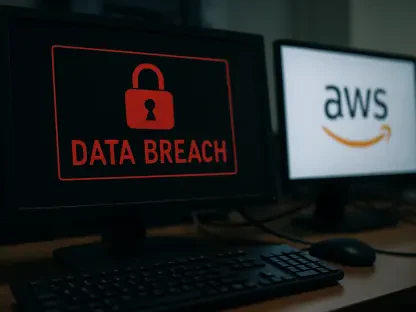

The digital trust that underpins modern commerce has been assigned a precise monetary value by South Korean e-commerce leader Coupang: a staggering one-point-one-seven billion dollars. The company has announced an unprecedented compensation plan totaling 1.685 trillion won to address a massive data breach that compromised the personal information of nearly 34 million customers. This bold financial maneuver moves beyond typical corporate apologies, signaling a potentially dramatic shift in how companies address security failures and their duty to the users who power their platforms.
When a Data Breach Costs More Than a Billion Dollars
The price tag attached to Coupang’s security lapse is nothing short of historic, representing one of the costliest direct-to-consumer reparations for a data breach ever recorded. The $1.17 billion is not a regulatory fine or a class-action settlement but a proactive and self-imposed financial commitment to its user base. This decision highlights a calculated strategy to salvage public trust through a tangible, costly gesture of goodwill.
Disturbingly, this catastrophic event was not the work of a sophisticated external hacking syndicate but an insider threat. The breach originated from a single former employee, whose unauthorized access escalated into a crisis with a billion-dollar resolution. This underscores a critical vulnerability for corporations globally: the most significant threats can often come from within, turning trusted access into a weapon against the company and its customers.
A Betrayal of Trust for 34 Million Shoppers
Coupang is not just another online retailer in South Korea; it is an integral part of daily life, with a dominant market presence that has made it a household name. The breach, therefore, strikes at the heart of consumer confidence, affecting a significant portion of the nation’s population who rely on the platform for everything from groceries to electronics. The scale of the compromise transforms a corporate problem into a national concern.
The incident taps into a universal and growing anxiety surrounding personal data in the age of digital commerce. As consumers share more information with online retailers in exchange for convenience, their vulnerability increases. Coupang’s situation serves as a stark reminder that the vast databases powering modern retail are high-value targets, and a security failure can instantly erode the foundational trust between a brand and millions of its loyal customers.
The Anatomy of a Billion Dollar Security Failure
The security failure began quietly on June 24, when a former employee first gained unauthorized access to company servers. It wasn’t until nearly five months later, on November 18, that the intrusion was discovered, giving the perpetrator a significant window to operate undetected. The investigation swiftly traced the activity back to the insider, who exploited their previous system knowledge.
The compromised data included a trove of sensitive personal information for 33.7 million accounts. Exposed details ranged from names, phone numbers, and home delivery addresses to email addresses and, for a subset of users, their complete order histories. The financial remedy for this extensive loss of privacy was broken down into a simple, direct formula 50,000 won (approximately $35) purchase voucher for every single affected customer, culminating in the $1.17 billion total.
A Narrative of Accountability and Contradiction
In public statements, Coupang executives have framed the compensation plan as an embodiment of the company’s “customer-centricity” and a demonstration of its commitment to fulfilling its responsibilities. This narrative of accountability is designed to reassure customers that the company is taking the incident with the utmost seriousness, positioning the massive payout as a necessary step to make amends.
However, this public display of responsibility is complicated by conflicting statements from the company’s leadership. Founder Kim Bum-seok asserted that the stolen data was fully recovered after the intruder’s storage devices were seized. He further claimed the breach was limited, with information from only 3,000 cases found on the leaker’s computer, and that none of it was circulated externally. This raises a critical question: why commit to a billion-dollar payout for all 33.7 million users if the actual data loss was so contained?
Setting a New Precedent for Corporate Response
For affected customers, both current and former, the path to compensation is clear. The distribution of the 50,000 won vouchers is scheduled to begin on January 15, 2026, and will be automatically available to all individuals whose accounts were part of the breach. This straightforward process avoids the complex claims procedures that often follow such incidents.
Ultimately, Coupang’s response may have redefined the standards for corporate responsibility in the wake of a data breach. Moving far beyond the industry norm of offering complimentary credit monitoring services, the company’s decision to provide substantial, direct financial compensation set a powerful new precedent. This event established that the cost of losing customer data could be measured not just in reputational damage or regulatory penalties, but in a direct, billion-dollar apology paid to the people who were wronged.