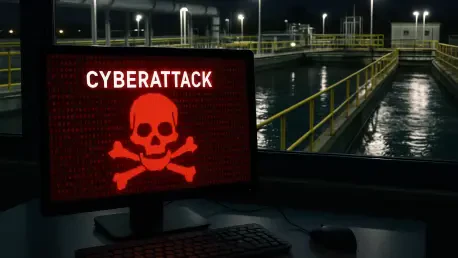

The sudden and simultaneous disruption of automated management systems across thirty distinct water treatment facilities in Minnesota has forced state officials to declare a localized emergency as technical teams scramble to regain control over critical operational technology. This coordinated digital assault targeted the supervisory control and data acquisition systems that regulate chemical dosing, pressure monitoring, and filtration sequences for hundreds of thousands of residents. While early reports indicate that water safety remains within acceptable parameters, the sheer scale of the intrusion suggests a sophisticated level of reconnaissance and execution previously unseen in regional utility sectors. Security researchers have noted that the attackers exploited a common vulnerability in remote access protocols that many municipalities relied upon for maintenance efficiency. This breach serves as a stark reminder that the digital perimeter of public works is often more porous than initially believed, necessitating a complete reevaluation of defensive standards.
Analyzing the Mechanics of the Digital Intrusion
The attackers appeared to have gained initial entry by leveraging a zero-day exploit in the legacy virtual private network gateways utilized by several third-party contractors who provide maintenance for these facilities. Once inside the local networks, the malicious actors moved laterally, identifying the programmable logic controllers that govern the physical pumps and valves. Unlike previous isolated incidents that focused on ransom demands, this campaign demonstrated a clear intent to manipulate operational parameters, such as pH levels and chlorine concentrations, which could have direct implications for public health if left undetected. Forensic analysis suggests that the infiltration was not a sudden event but rather the culmination of a multi-month persistence strategy where the threat actors quietly mapped out the internal architecture of each utility. By synchronizing the activation of their malware, they effectively overwhelmed the state’s incident response capacity, forcing many rural districts to switch.
Furthermore, the diversity of the targeted entities reveals a calculated attempt to test the resilience of both small-scale rural districts and more robust metropolitan water authorities. While larger cities often possess dedicated cybersecurity personnel and modern monitoring tools, many of the thirty affected utilities operate with limited budgets and reliance on legacy hardware that lacks native encryption or multi-factor authentication capabilities. This disparity in defensive posture allowed the attackers to use smaller, less secure networks as a testing ground before moving toward more complex targets. The specific focus on Minnesota, a state with a high density of lake-fed water systems, highlights a strategic interest in disrupting the reliable delivery of natural resources during seasonal peak usage. Technical experts are currently investigating whether the malicious code contains specific modules designed to bypass regional safety interlocks that are typically hardwired into systems.
Implementing Resilient Security Architectures and Policies
The Cybersecurity and Infrastructure Security Agency along with the Federal Bureau of Investigation have deployed rapid response teams to the region to assist in the recovery and attribution process. These federal agencies are working alongside state engineers to implement a series of emergency “burn and rebuild” procedures, which involve wiping infected hardware and reinstalling firmware from verified offline backups. The coordination of this response is complicated by the need to maintain continuous water service while simultaneously conducting a thorough forensic investigation of the compromised systems. Federal authorities have issued a nationwide advisory to all water and wastewater utility operators, urging an immediate audit of internet-facing assets and the removal of default credentials on all industrial controllers. This event has accelerated the implementation of more stringent reporting requirements for critical infrastructure, ensuring that any future anomalies are flagged at the national level.
The response to the Minnesota water utility crisis established several critical precedents for the protection of national infrastructure through the adoption of decentralized security models. Analysts concluded that the reliance on centralized remote access was the primary failure point, and subsequently, most utilities moved toward localized authentication methods that required physical presence for critical system changes. Engineers implemented new rigorous testing cycles for software updates, ensuring that third-party patches were vetted in isolated environments before being deployed to live production systems. These actions highlighted the necessity of maintaining manual operational proficiency among staff, ensuring that the ability to manage water systems without digital assistance was preserved as a fail-safe measure. Ultimately, the lessons learned from this breach encouraged a broader shift toward public-private partnerships that shared threat intelligence in real-time, effectively minimizing future risks.